Episode 2.1: SOME GIRLS

somegirls

SOME GIRLS – The Rolling Stones – Rolling Stones Records – 1978

Disco. Punk. Blues. Rock. Country. Touching on each of these unique, diverse genres on one album looks like a recipe for disaster on paper. And yet, in the tight span of 40 minutes, that combination was the magic kick that the Rolling Stones needed to revive their careers.

Things were not looking good for the Stones by the late-70s. After getting carried away on their own popularity following a string of hit albums — Beggars Banquet, Let It Bleed, Sticky Fingers, and Exile on Main St. — they released a string of subpar ones. Drugs were becoming an increasing problem, and a heroin bust left Keith Richards facing serious legal issues and the threat of an extended jail sentence. Their early peers, bands like the Beatles, the Animals, and Led Zeppelin, had either broken up long ago or were on the fade. And now in their early 30s, they were considered too old to be trusted as rock stars anymore, quickly losing relevancy to the young punks and disco acts on the rise.

Suffice it to say, their next album had the power to make or break them. An experimentation with what was new, while still remaining true to the Stones’ established rock aesthetic, 1978’s Some Girls was a critical and commercial success that breathed new life into the band.

In this episode, we examine the influences of emerging musical movements like disco and punk on the Stones, how a decidedly British band made an album that captured the New York spirit, and why it stands up over time as a testament to the Rolling Stones’ continued legacy as one of the greatest rock and roll bands of all time.

This episode is in memory of all the people who were killed and injured in Las Vegas this week, and to the lasting influence of Tom Petty. May it remind you why we all love and celebrate music in the first place.

Listen to Some Girls: iTunes | Spotify | YouTube

Subscribe on iTunes

(ps — while you’re there, please rate and review us in the iTunes store so more people can discover us and we can all be friends who talk about music together!) 

Episode notes and postscript corrections

  • Alright, the Rolling Stones had a lonnnnng history before they even got around to Some Girls, so we’ll spare you all our CliffsNotes and just direct you to Wikipedia to spiral from there.
  • We’ve discussed this before: the mid- to late-70s were an incredibly exciting time in music, particularly in New York. It’s no wonder the Stones wanted to play catch-up and pull in punk and disco influences to stay current.
  • LOL at the Stones being considered too old in the ‘70s.
  • Because of Keith’s legal issues stemming from a bust for heroin possession, Mick ends up being a driving creative force on Some Girls. For more about that, check out our further reading section below.
  • Current artists are always going to be influenced by what came before, but we seem to be in the midst of a ‘70s and early ‘80s renaissance with bands like Vulfpeck, TOPS, etc.
    • That sentiment about all music being cyclical because there are only so many chords that we couldn’t source? It came from Tom Petty. He’s invaded our subconscious to the point where we could recall this interview he gave about 12 years ago, in which he says he’s found himself writing a song and “then [realizing] it’s somebody else’s song. […] But there’s only so many words and so many notes, so sometimes you do cross somebody else’s territory.”
  • Mick Jagger is a slut. There. We said it.
  • Hahahahahahahaha “Some Girls” would never be made today hahahahahaha
  • No, seriously, can anyone provide any evidence that Mick did research at CBGB because “Lies” and “Respectable” sure sound like he did.
  • Someone compiled a list of all the times Keef sings lead on Stones’ songs, so there’s that.
  • “Beast of Burden” is easily one of the top 10 sexiest songs ever do not fight us on this.
  • What’s there to say about the Rolling Stones’ legacy? They’ve been around forever and are seemingly immortal, having influenced countless of musicians and fans for more than 50 years.

Album credits:
Mick Jagger — lead and backing vocals, electric guitar, piano, percussion
Keith Richards — electric guitar, backing vocals, acoustic guitar, bass guitar, piano, lead vocals
Bill Wyman — bass guitar, synthesizer
Charlie Watts — drums
Ronnie Wood — electric guitar, backing vocals, pedal steel, acoustic guitar, bass guitar, bass drum
Sugar Blue — harmonica
Ian McLagan — electric piano, organ
Mel Collins — saxophone
Simone Kirke — congas
Ted Jensen — mastering

Favorite track(s): Miss You (Carly) | Miss You (Carrie)
Least favorite track: Far Away Eyes (Carly) | Far Away Eyes and Before They Make Me Run (Carrie)

Further watching: 
Shine a Light (Martin Scorsese documentary on the Rolling Stones) | 2008
The Rolling Stones: Just for the Record – The ’70s | 2002
Keith Richards: Life (BBC documentary) | 2010
Some Girls tour interview | 1978

Further reading:
Rolling Stones’ ‘Some Girls’ (from the 33 1/3 book series) | 2011
Life (Keith Richards’ memoir) | 2010

How the Rolling Stones went disco: Inside the making of “Miss You” | Salon (August 2017)
How the Rolling Stones Bounced Back With ‘Some Girls’ | Ultimate Classic Rock (June 2015)
The Rolling Stone Interview: Jagger Remembers | Rolling Stone (December 1995)
Mick Jagger: Jumpin’ Jack Flash at 34 | Rolling Stone (June 1978)
Some Girls review | Rolling Stone (June 1978)

Episode 10: TOM PETTY AND THE HEARTBREAKERS

tom-petty-and-the-heartbreakers.jpg

TOM PETTY AND THE HEARTBREAKERS – Tom Petty and the Heartbreakers – Shelter Records – 1976

Before Tom Petty and the Heartbreakers were Tom Petty and the Heartbreakers, classic American rock icons, they were just five kids from Gainesville, Florida who had driven cross country to Los Angeles with $200 and hopes of landing a record deal for their southern rock group Mudcrutch.

Their ascent would be a slow one; the group signed with Shelter Records in 1974 and released a single, only to be dropped from the label. The band broke up. The band got back together and found themselves with a new opportunity to release an album — this time with a better name: Tom Petty and the Heartbreakers.

Released in 1976, Tom Petty and the Heartbreakers’ self-titled debut is an amalgamation of styles and influences. It travels from classic blues to swampy country to classic ‘50s rock in songs that are abruptly short and full of anxious, pulsing rhythms that weren’t too deviant from the emerging punk scene. It’s no wonder people didn’t know what to do with them or how to classify them when the album was released.

Though the album contains songs that are now staples of American pop culture, engrained in our collective consciousness — songs like “American Girl” and “Breakdown” — it would be a few years before Tom Petty and the Heartbreakers cemented their status as household name rock stars — but it’s a status they’ve held onto.

In this episode, we discuss the variety of musical influences on early Heartbreakers work, dive into Tom Petty’s sparse songwriting style, and talk about why Tom Petty and the Heartbreakers’ enduring, four decade long careers truly inspire us.

Listen to Tom Petty and the Heartbreakers: iTunes | Spotify | YouTube

Subscribe on iTunes

(ps — while you’re there, please rate and review us in the iTunes store so more people can discover us and we can all be friends who talk about music together!) 

Episode notes and postscript corrections

  • We love almost anything and everything Tom Petty (with and without the Heartbreakers) has released, but we’re covering the Heartbreakers’ debut, rather an album as iconic as Damn the Torpedoes, because we want to have conversations about albums without just rehashing what everyone else has already said. Check out our FAQ page for more on our philosophy.
  • See our further watching and further reading links below for two tomes on Tom Petty and the Heartbreakers that we cannot endorse more emphatically.
    • Petty is Warren Zanes’ incredibly in-depth, intimate, and breathtaking biography of Tom Petty that will probably make you love Tom Petty more than you thought you could.
    • Runnin’ Down a Dream is Peter Bogdanovich’s epic, 4-hour long documentary of your dreams. It’s enthralling, candid, and thorough — so worth a binge session.
  • It all starts with Mudcrutch.
    • Listen to some of their original demos here or here.
    • Mudcrutch got back together in 2007 and have released two albums since. Listen to them here.
  • TBH, we don’t blame the good people of 1976 for thinking Tom Petty and the Heartbreakers were punk. It really doesn’t help that there was already a punk band — a staple at CBGB — who were also called the Heartbreakers…
  • We’re not going to get too too deep on lyrical analysis — Tom Petty’s songwriting is often sparse and without a lot of intentional metaphors to unpack; he’d probably roll his eyes and think we were really digging for bullshit if we went that route.
  • “Breakdown” is a fantastic combination of old and new. Seriously.
    • Listen to “Breakdown.” Then listen to Booker T. and the M.G’s “Green Onions.” Note the similarities.
    • Listen to “Breakdown.” Then listen to Ray Charles’ “Hit the Road Jack.” Boom.
    • Listen to a live version of “Breakdown” where they weave the aforementioned classic into their own song.
    • All that seem like a lot? Follow us on Spotify to listen to all the great songs we just mentioned (and more to come!) in order of discussion for your listening-and-nerding pleasure.
      • Except for Suzi Quatro’s cover. That one you can watch here.
  • We love all the Heartbreakers, but honestly, people don’t talk enough about how MVP Mike Campbell and Benmont Tench are.
  • All roads go back to Gainesville. (Watch this. Trust us on this one.)
  • 500% here for this video of Tom Petty and the Heartbreakers performing “Anything That’s Rock ‘N’ Roll” on Top of the Pops.
  • “Strangered in the Night” could totally be a sister song to “Two Gunslingers.” If you’re a regular listener, you’ll know how much we love sister songs.
  • We went down a musical rabbit hole again, which is fun.
    • Listen to Linda Ronstadt’s “You’re No Good.” Then listen to “Fooled Again.”
    • Listen to “Fooled Again.” Then listen to Sheryl Crowe’s “My Favorite Mistake.”
    • Did your brain melt a little bit?
  • Listen, “American Girl” is a bop and we don’t have time for any haters.
    • Speaking of the Byrds… Roger McGuinn actually ended up covering “American Girl” in 1977. (It’s in our master playlist, hint-hint, nudge-nudge.)
    • Slow this song down and you’ve got a haunting (but good) ballad.
    • Seriously. Don’t be that person who hates “American Girl” just because it’s popular. Just don’t.
    • Also, don’t be that person who wears the band tee-shirt without knowing anything about the band. Follow this trusty rule: Can you name two non-singles and the bassist? Then you can wear the band tee.
  • We love Tom Petty and the Heartbreakers so very much, apologies if we gushed a little.
  • If you missed the last (and only, so far!) Mudcrutch tour, we are truly sorry. (Carly feels your FOMO). If you did, and you’d like to talk about how magical it was with Carrie, hit us up.
  • Tom Petty and the Heartbreakers are currently on a North American tour to commemorate their 40th anniversary.
    • No, it’s not a greatest hits tour; it’s full of deep cuts to be stoked about.
    • If you can go: GO. (And say hi to Carrie if you see her at Newark and/or Forest Hills — yes, both, yes, she knows she has a problem.)
    • If you can’t go: Hit up this awesome live recording of their 30th anniversary tour.
  • Again, come say hi on Facebook, Twitter, or email. We always love making pod friends.

Favorite track(s): Breakdown (Carly) | American Girl, Luna (Carrie)
Least favorite track: Luna (Carly) | Mystery Man (Carrie)

Album credits:
Tom Petty – vocals, electric guitar, acoustic guitar, keyboards
Mike Campbell – electric guitar, acoustic guitar
Benmont Tench – piano, hammond organ, keyboards
Ron Blair – bass guitar on tracks 1–2, 4–5, 7–10, cello
Stan Lynch – drums on tracks 1–2, 4–10, keyboards

Jeff Jourard – electric guitar on tracks 2, 7
Donald “Duck” Dunn – bass guitar on track 3
Emory Gordy – bass guitar on track 6
Randall Marsh – drums on track 3
Jim Gordon – drums on track 6
Noah Shark – maracas, tambourine, sleigh bells
Charlie Souza – saxophone on track 3
Phil Seymour – backing vocals
Dwight Twilley – backing vocals

Further watching:
Runnin’ Down a Dream | 2007

Tom Petty MusiCares Speech: Rock & Roll Empowers America’s Youth | 2017
Tom Petty Q on CBC interview | 2014
Rock and Roll Hall of Fame induction speech | 2002

Further reading:
Petty (biography) | 2015
Conversations With Tom Petty (interview compilation) | 2005

Benmont Tench: The 40th Anniversary Interview | Keyboard Mag (March 2017)
40 Years Ago: Tom Petty and the Heartbreakers Release Their Debut Album | Ultimate Classic Rock (November 2016)
Tom Petty On Cheap Speakers And George Harrison | NPR (August 2014)
Tom Petty: Rolling Stones Were ‘My Punk Music’ | Rolling Stone (July 2014)
Tom Petty Knows ‘How It Feels’ | NPR (July 2006)
Mike Campbell Is More Than Just the Guitarist For Tom Petty and the Heartbreakers | The Georgia Straight (August 1999)

Episode 9: MARQUEE MOON

marqueemoon

MARQUEE MOON – Television – Elektra Records – 1977

On March 31, 1974, a young band called Television played their first gig at recently-opened Bowery dive CBGB. Not long before, they had helped Hilly Kristal put the CBGB stage together; now, they were performing in the club that they would help to immortalize. Television, comprised of Tom Verlaine, Richard Lloyd, Richard Hell (replaced by Fred Smith in 1975), and Billy Ficca, soon became the de facto house band at CBGB, appearing regularly and becoming a staple of the growing scene that would come to include the Ramones, Blondie, Talking Heads, Dead Boys, and Patti Smith, to name a few.

With their popularity growing, the logical next step would have been to record an album, but Television bided their time. They chose to hone their sound, to develop and grow as a band, so by the time they were signed to Elektra Records in 1976, they were more than ready to begin work on what would become the seminal Marquee Moon. Released in early 1977, the album is regarded as one of the greatest of the punk era, containing songs that continue to be referenced today in covers and samples.

We chose this album as the first to be covered from our show’s namesake year because of its grit, its timeliness and timelessness, and its particular way of getting under your skin and making you feel more electrically charged than you were when you began the album. In this episode, we explore how Television’s and CBGB’s beginnings are inextricably linked, dive into Marquee Moon’s darkness and dreaminess, and outline the continuation of the band’s sound, proving that their legacy still thrives today.

Listen to Marquee Moon: iTunes | Spotify | YouTube

Subscribe on iTunes

(and hey, while you’re at it, please rate and review us in the iTunes store so more people can discover us and we can all be pod friends who talk about music together!) 

Episode notes and postscript corrections

  • RIP CBGB. We didn’t know you personally, but we’ve consumed enough (too much) secondhand information to miss you.
    • An anecdote about how long we’ve been ~like this~: when CBGB was closing, Carrie begged her parents to take her to one of the final concerts. Unsurprisingly, they were like “You are 15 years old. No.” Carly, also 15 at the time, cried and moaned “Nooo, I’m never going to get to go to CBGB!!!!” These are very true stories. You can ask our parents.
    • We do not speak of or even look at the men’s designer fashion store (or even use its name) that’s in CB’s place now. It’s offensive.
    • See our further watching section below to feast on some great docs about Hilly Kristal and CBGB. Just don’t watch the CBGB movie. It’s… not good.
    • Our further reading section is also stacked, by the way.
  • You can listen to Neon Boys’ early demos here for a taste of what Television would become.
  • You can listen to the Brian Eno demos here to understand just how developed their final recorded music was.
  • Marquee Moon was a commercial flop in the U.S., but it was a moderate hit in the U.K., and it ended up on countless year-end best-of reviews (not to mention more 10, 50, and 100 Best of All Time lists).
  • 20th Century Women gets early punk so right, but this quote is particularly spot on: “It’s like they’ve got this feeling, and they don’t have any skill, and they don’t want skill, because it’s really interesting what happens when your passion is bigger than the tools you have to deal with it. It creates this energy that’s raw. Isn’t it great?”
    • What’s so fascinating about Television is that they were punks who had both — talent and passion — and were still able to exude raw energy.
  • We’ve discussed this before, but we love how diverse the CBGB microcosm was. Talk to us about it. We weren’t alive to witness it ourselves.
  • This episode goes out to Karin Berg and many, many other women whose histories have been buried. We’re doing our best to make sure their contributions aren’t forgotten.
  • Apparently “Venus” is about LSD? Or falling in love? Or both? Maybe don’t ask Tom Verlaine, because he’s actually said he doesn’t always understand what he’s writing.
  • Shoutout to basslines you can groove to. We love ‘em.
  • Okay, but “Friction” totally sounds like it could be a Zeppelin song, despite sounding authentically Television at the same time. This just shows how complex their sound could be and how many influences Television pulled in.
    • See our further reading section below to check out the NME review of Marquee Moon and an insanely in-depth interview with Richard Lloyd that covers all the bases. Click on that link. Actually read it. It’s good. Seriously.
    • Lawrence Welk? Really? Really.
  • Fasten your seatbelts, grab your pool floaties, do whatever you gotta do. We’re about to tackle “Marquee Moon.”
    • What. A. Side. One. Closer. Honestly. “Stairway to Heaven” is possibly the only song that can come close to comparing.
    • “Marquee Moon” has several runtimes: 9:58 on the original vinyl pressing, 10:38 on subsequent rereleases, and 14 minutes or longer live. As much as we lust after having an OG copy of an album, we gotta say: those extra 40 seconds are so necessary.
    • Where were you when you first heard “Marquee Moon?”
    • No, really, someone wrote an opinion piece arguing that “Marquee Moon” is the best after party song ever.
    • Ranking it eighth in their flawed — we’ve mentioned our disdain for this list before (love you, Pitchfork, but cannot with this), but if you want to talk about it, by all means, contact us — list of the 200 best songs of the ‘70s, Pitchfork got something so, so right, describing “Marquee Moon” as: “punk’s contrarian think piece; a 10 minute odyssey for the dreamers and Deadheads inside CBGB.”
    • There is so. much. imagery. in this song. We would be here for hours if we went through it line by line, but here are the lyrics if you want to give it a stab.
  • Yes, that’s “Elevation” you hear sampled in “Lovefool.”
  • Television’s legacy, though small in recorded output, is vast in influence, from playing an integral role in the incubator community of CBGB to influencing the sound of countless bands to follow them, from Pearl Jam to R.E.M. to the Strokes.
  • Television still plays live dates together, although with guitarist Jimmy Rip in Richard Lloyd’s place.
    • Television is hitting the festival circuit this summer, if you’re interested.
    • Richard Lloyd is performing solo these days, including a set on June 3 in New York at the Bowery Electric. You know we’ll be there, so if you’re in the area, check it out (and come say hi).
  • As always, say hello on Facebook, Twitter, or email. We’ve had some wonderful conversations and made some great friends of the pod so far, and the more, the merrier.

Favorite track(s): Marquee Moon and Friction (Carly) | Marquee Moon and See No Evil (Carrie)
Least favorite track: Torn Curtain (Carly) | Torn Curtain (Carrie)

Album credits:
Billy Ficca – drums
Richard Lloyd – guitar (solo on tracks 1, 4, 5, and 6), vocals
Fred Smith – bass guitar, vocals
Tom Verlaine – guitar (solo on tracks 2, 3, 4, 7, and 8), keyboards, lead vocals, production

Further watching:
Richard Lloyd interview | 2013
Punk Revolution NYC (Television comes in around part 4, but all parts are enthralling) | 2011
Rock and Roll Punk | 1995
Tom Verlaine interview | 1992
Hilly Kristal interview (Warning: you will get feels) | 1990
The Blank Generation | April 1976

Further Reading:
Television’s Punk Epic “Marquee Moon,” 40 Years Later | Pitchfork (February 2017)
How Television Made Marquee Moon, the Best Punk Guitar Album Ever | The Observer (February 2017)
1976-1978: CBGB’s House Photographer | Mashable (September 2014)
Friction: The Making of Marquee Moon (aka the brilliant, super long Richard Lloyd interview) | Uncut Magazine (March 2012)
Television’s Marquee Moon (from the 33 1/3 book series) | 2011
The Rise of New York’s ’70s Rock Scene | Vanity Fair (November 2002)
Marquee Moon review | NME (February 1977)
Everything is Combustible (Richard Lloyd’s forthcoming memoir) | October 2017

Episode 8: SONGS FOR BEGINNERS

graham-nash-songs-for-beginners

SONGS FOR BEGINNERS – Graham Nash – Atlantic Records – 1971

The year is 1970. America is in the midst of political turmoil: the Vietnam War faces extensive grassroots backlash, four students are killed at Kent State University in Ohio, and women strike for equality in New York. The music world is not without its share of anguish: the Beatles announce their breakup, American Top 40 is about to make scoring a hit record even more important to artists, and both Jimi Hendrix and Janis Joplin overdose and die within weeks of each other. Graham Nash is dealing with his own personal unrest. Fresh off of two breakups, romantically with Joni Mitchell and professionally with Crosby, Stills, Nash, and Young, and politically charged, Nash takes to the studio to record his debut solo album, Songs For Beginners.

Assembled with the assistance of a slew of members of the crescendoing Laurel Canyon music community, Songs For Beginners succinctly captures the trifecta of traits that have defined Nash’s songwriting: gut-punches of raw emotion, crafted with a pop sensibility in mind, and full of rallying cries for social and political activism. Nash openly and unabashedly shares his most personal feelings, whether they are intimate depictions of heartbreak or outraged shouts, in a manner that will influence folk-rock and indie singer-songwriters for generations to come.

In this episode, we examine Graham Nash’s powerful lyrics and their lasting impression on society, discuss the wealth of music released during the Laurel Canyon era and the importance of creative incubator communities, and get deep into our feels about the relationship between Graham Nash and Joni Mitchell that fueled this album.

Listen to Songs For Beginners: iTunes | Spotify | YouTube

Subscribe on iTunes

(and hey, while you’re at it, please rate and review us in the iTunes store so more people can discover us and we can all be pod friends who talk about music together!) 

Episode notes and postscript corrections

  • See our further watching section for a great short doc of Graham Nash’s history with the Hollies.
  • We love the music of Laurel Canyon. Here’s a playlist.
  • We long for the days of creative incubator communities. Here are some great articles about the Laurel Canyon scene, New York’s punk/post-punk/new wave scene, the Omaha indie rock movement, and the Market Hotel scene in Brooklyn worth checking out if you feel the same way.
  • SO. MANY. PEOPLE. play on this album. Check out the personnel list below. It’s stacked.
  • Pop music doesn’t have to be meaningless, algorithm-pleasing, saccharine drivel. Pass it on.
  • We are going to talk so much about Joni Mitchell and feelings on this episode, so get ready.
    • Here’s something tiny and lovely about Joni and Graham that will make your heart swell.
    • Blue is Joni’s own breakup album, and it heavily features her relationship with Graham. It is one of the most perfect, heartbreaking, profound albums ever. (Sorry if you disagree, but also, if you do, who are you and has your heart been replaced with a cold battery?)
  • A short history of Jerry Garcia just randomly deciding to play pedal steel guitar.
  • David Crosby and Graham Nash both dated Joni Mitchell and remained good friends. They are not friends now. We don’t have nearly enough time to cover their petty drama right now, but the headline on this article about the current state of their relationship is quite entertaining.
  • Here’s a definition of what the “silent majority” is, in case you weren’t alive for Nixon’s presidency or just didn’t pay attention in history class.
  • This is exactly how we feel when we listen to “Simple Man.”
    • Also, this.
    • “If you hold sand too tightly in your hand, it will run through your fingers. Love, Joan.” It’s fine. We’re fine.
    • Will never be over this photo of Joni and Graham, truly.
    • See the further watching links below for a fantastic interview with Graham from the Library of Congress. His anecdotes on love at first sight are around 45:20.
    • Obviously, they’d never work out, because Joni is the “Cactus Tree.”
  • Let’s talk about “Chicago.”
    • Here’s a summary of the Chicago Eight (later reduced to seven) trials.
    • This core theme — we must stand up for what is right and fight this systematic injustice — is still so unsettlingly relevant. Can we pause and think about that for a second?
    • Read Graham’s thoughts about that changed “rules and regulations, who needs them?” lyric.
    • Go see Graham Nash live, if you can. “Chicago” is still a showstopper.
  • Graham Nash’s influence on artists can be seen anywhere from M. Ward to Fleet Foxes to Bon Iver (watch this live cover of “Simple Man”) and is vast. See 2010’s Be Yourself: A Tribute to Graham Nash’s Songs For Beginners to see just how sweeping.
  • Graham Nash is still “shooting his mouth off” through art, whether it’s touring, recording new albums (his most recent, This Path Tonight, is quite good), painting, or photography. His philosophy is one we are behind 100 percent and one of the reasons why we have a great deal of respect for him: “This is what I do with my life. I get up in the morning and create. What an incredible life I get to lead. [….] I just want to make sure that, with every second I have left of my life, I need to be creating.”
  • As always, hit us up with your thoughts on today’s episode or just to say hey. Like and follow us on Facebook and Twitter, or drop us an email.

Favorite track(s): Simple Man and Better Days (Carly) | Chicago (Carrie)
Least favorite track: There’s Only One (Carly) | There’s Only One (Carrie)

Album credits:
Graham Nash — vocals; guitar all tracks except “Better Days” and “Simple Man”; piano on “Better Days,” “Simple Man,” “Chicago” and “We Can Change the World”; organ on “Better Days,” “There’s Only One,” “Chicago” and “We Can Change the World”; paper and comb on “Sleep Song”; tambourine on “Chicago” and “We Can Change the World”
Rita Coolidge — piano on “Be Yourself” and “There’s Only One”; electric piano on “Be Yourself”; backing vocals on “Military Madness,” “Better Days,” “Simple Man,” “There’s Only One,” “Chicago” and “We Can Change the World”
Jerry Garcia — pedal steel guitar on “I Used to Be a King” and “Man in the Mirror”; piano on “I Used to Be a King”
Joe Yankee — piano on “Better Days” and “Man in the Mirror”
Dorian Rudnytsky — cello on “Simple Man” and “Sleep Song”
Dave Mason — electric guitar on “Military Madness”
David Crosby — electric guitar on “I Used to Be a King”
Joel Bernstein — piano on “Military Madness”
Bobby Keys — saxophone on “There’s Only One”
David Lindley — fiddle on “Simple Man”
Sermon Posthumas — bass clarinet on “Better Days”
Chris Ethridge — bass on “Man in the Mirror,” “There’s Only One,” “Chicago” and “We Can Change the World”
Calvin “Fuzzy” Samuels — bass on “Military Madness,” “Better Days,” and “Be Yourself”
Phil Lesh — bass on “I Used to Be a King”
Johnny Barbata — drums on “Military Madness,” “I Used to Be a King,” “Be Yourself,” “Man in the Mirror,” “There’s Only One,” “Chicago” and “We Can Change the World”; tambourine on “Chicago”
Dallas Taylor — drums on “Better Days”
P.P. Arnold — backing vocals on “Military Madness”
Venetta Fields, Sherlie Matthews, Clydie King, Dorothy Morrison — backing vocals on “There’s Only One,” “Chicago” and “We Can Change the World”

Production personnel:
Graham Nash — producer
Bill Halverson, Russ Gary, Larry Cox — recording engineers
Doug Sax — mastering
Gary Burden — art direction
Joel Bernstein, Graham Nash — photography

Further watching:
Graham Nash: “Wild Tales: A Rock & Roll Life” | 2014
Hotel California: LA From the Byrds to the Eagles | 2007
The Hollies: Graham Nash | Documentary date unknown

Further reading:
Graham Nash Talks Life After Divorce, CSNY’s Future | Rolling Stone (August 2016)
Wild Tales: A Rock & Roll Life | Graham Nash’s memoir (2014)

Episode 6: #1 RECORD

Big-Star-1-Record

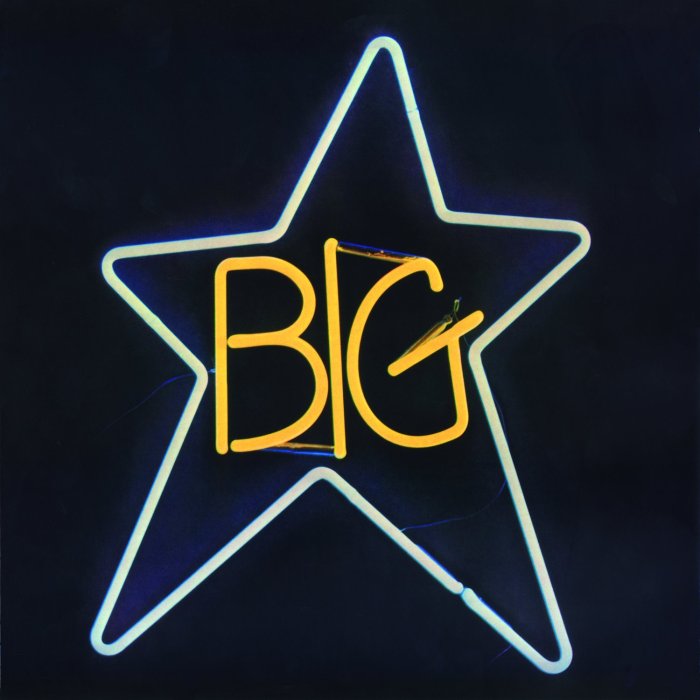
#1 Record – Big Star – Ardent Records – 1972

Towards the end of 1971, four young men from Memphis — some established musicians already, some just starting out — came together to record their debut album. Known collectively as Big Star, they delivered a set of songs that were at once intensely intimate and emphatically exuberant. Their music depicted how it feels to have boundless energy with limited places to spend it, coupled with curious, angst-ridden minds in search of kindreds. It is music that encapsulates the essence youth, yet remains universal and relatable at any age. It’s music that is very much of its time, yet still sounds fresh today.

Their debut album, #1 Record, was released in the summer of 1972, and was followed by two more albums in the 1970s before the group disbanded, never reuniting until nearly two decades later. Big Star has since influenced some of today’s most enduring and celebrated artists; publications like Rolling Stone consistently rank the group’s albums among the greatest of all time, so the question must be asked: why is Big Star not a household name?

In this episode, we discuss #1 Record‘s origins, influences, and what kept it from commercial success. We also talk about why it is so personal to us, and why it’s the kind of music that, once found, cannot be forgotten.

Listen to #1 Record: iTunes | Spotify | YouTube

Subscribe on iTunes

Episode notes and postscript corrections

  • Here’s a more thorough timeline of the formation and evolution of Big Star.
  • We highly recommend the documentary Big Star: Nothing Can Hurt Me. See our further watching links below to watch the trailer and where to find it online
    • Here’s that Twitter thread on the rest of our favorite music docs that we mentioned. Check out ones you haven’t seen yet, or just rewatch some perennial faves.
  • Big Star has been called one of the pioneers of “‘70s power pop,” and, a full definition of what exactly that sub-genre is (because, to be honest, we were a little “okay, clarification, please” when we read this) can be found here.
  • “The Ballad of El Goodo” has been seen in some instances as a Vietnam War protest song, primarily due to these lyrics: “They’ll zip you up and dress you down and stand you in a row / But you know you don’t have to, you can just say no.”  
  • Yes, “In the Street” is the That ‘70s Show theme song.
    • Yes, they actually used a Cheap Trick cover version.
    • Again, no offense to any That ‘70s Show fans or anyone who worked on it, but we did not watch that show. So, sorry, this will be a relatively That ‘70s Show-free podcast.
  • Studio banter is the key to our hearts. 
  • Chris Bell’s struggles with depression, anxiety, and sexuality have been speculated upon for years after his death, and “Try Again” can be seen as a window into his “tortured soul.”
  • Big Star influenced a host of modern artists, from Elliott Smith and M. Ward to Wilco and REM. Follow us on Spotify — our master playlist has all the songs we referenced in this episode, along with some choice related music to draw out these comparisons.
  • Feel free to get in touch with us! We have had some great conversations so far. We have an ever-evolving FAQ page here, but shoot us an email, like and message on Facebook, and follow on Twitter to get at us with your questions, comments, or just a “hello!”

Favorite track(s): Watch the Sunrise (Carly) | Feel (Carrie)
Least favorite track: The India Song (Carly) | The India Song (Carrie)

Album credits:
Chris Bell – vocals, guitar
Alex Chilton – vocals, guitar
Andy Hummel – vocals, bass guitar
Jody Stephens – drums
Terry Manning – electric piano, harmony vocals

Further watching:
Thank You, Friends: Big Star’s THIRD Live trailer | April 2017
Big Star: Nothing Can Hurt Me trailer | 2012 | Currently available to stream on Amazon

Further reading:
Big Star: #1 Record/Radio City rerelease review | Pop Matters (October 2014)
The Ballad of Big Star | Grantland [ed. note: RIP, Grantland. We miss you.] (July 2013)
The 10 Best Big Star Songs | Stereogum (September 2012)
Depression, Quaaludes, and the Wildest TGI Fridays in America: The Real Story of Big Star | Noisey (March 2012)
You’ve Never Heard Big Star’s ‘#1 Record’?! | NPR (June 2011)
Big Star: The Unluckiest Band in America | NPR (February 2010)

Episode 5: THE SLIDER

t-rex-the-slider

THE SLIDER – T. Rex – T. Rex (UK)/Reprise (USA) – 1972

By 1972, British music had fully renewed itself on the American scene in the form of glam rock. David Bowie, Slade, and Roxy Music were all part of this musical landscape that Marc Bolan and his band T. Rex expanded and exemplified. Glitter, platform boots, sci-fi imagery, and ’50s rock n’ roll roots made this sub-genre exciting, fresh, and new to kids of the ’70s who may not have realized that this was the rock n’ roll of Chuck Berry, Howlin’ Wolf, and Little Richard — just amped up and fuzzed out for the new generation.

T. Rex’s album The Slider made full use of all of these elements to create a vibe that spoke to a new generation of rock fans. The album was the pinnacle of the dreamworld that Marc Bolan created, and it leaves us spellbound more than 40 years later. In this episode, we theorize over some extremely poetic lyrics, attempt to decode Bolan, introduce a new hashtag (#RespectTheSequence), and somehow, somehow connect T.Rex to DJ Khaled.

Listen to The Slider: iTunes | Spotify | YouTube

Subscribe on iTunes

Episode notes and postscript corrections

  • We sound better! Thanks to our friend Jesse Berney for the mic recommendation.
  • We’re on Facebook! Like and follow us here, or just search for us. We are literally the only thing that comes up when you search 77 Music Club.
    • We’re also on Twitter! We tweet fun things! Follow us!
    • Last shameless self-promotion bit: follow us on Spotify, where we host a master playlist with all the songs we reference in each episode
  • Here’s a summary of how T. Rex morphed from psychedelic folk group Tyrannosaurus Rex to glam rock T. Rex.
  • “Ride a White Swan” was T. Rex’s real breakthrough to glam rock in 1970.
  • Pitchfork placed “Metal Guru” at 154 on their best 200 songs of the 1970s (more about that later) — read what they had to say about it here.
  • Our last episode highlighted a band whose method was music first, then lyrics. With Marc Bolan, the lyrics came first, then the music. When met with criticism that T. Rex’s music was often repetitive or formulaic in composition, Bolan explained that this was intentional: the music needed to remain simple to let his complex lyrics shine.
  • “The Slider” definitely references drugs, definitely has exaggerated coke sniffing lines, and allusions to growing pot. Just @ us if you think we’re wrong, but it screams “Hm, do you get high? Do you? I don’t know, why don’t you tell us more.”
  • Marc Bolan’s lyrics are bonkers poetry and we absolutely love them. Just read “Baby Boomerang” and see for yourself.
    • The songs were mostly nonsense, but rather than sounding like gibberish, Bolan seemed to be speaking in an alien code that, to this today, we’re still not cool enough to decode.” — Pitchfork, getting something right in their deeply flawed (our opinion) 200 Best Songs of the 1970s list.
    • The Shins covered “Baby Boomerang” in 2004 and you should definitely give it a listen.
  • Anyway, here’s “Spaceball Ricochet.”
    • Part of punk rock’s merits was that it heralded in a greater acceptance of songs that weren’t joyous or pompous, rather, songs that were real, songs that were honest about insecurities in their lyrics and weren’t pretending to be cool. We think “Spaceball Ricochet” stands as a precursor to the genre; we’d love to know your thoughts on this hypothesis.
  • Listen to “Buick McCane.” Then listen to the Black Keys. (They’re both in our playlist; and, actually, it’s been noticed more than once that they wrote a song that is basically “Mambo Sun,” so.) Let us know if you think they could totally kill a T. Rex cover.
  • “Telegram Sam” is about Marc Bolan’s accountant, not his drug dealer. Sorry.
  • Can anyone tell us what “Rabbit Fighter” is about? Because we are truly stumped.
  • If “Ballrooms of Mars” sounds like a very Bowie-esque title (and song), don’t be surprised— Bowie and Bolan were bros.

Favorite track(s): Telegram Sam and Ballrooms Of Mars (Carly) | Metal Guru (Carrie)
Least favorite track: Rabbit Fighter (Carly) | Rabbit Fighter (Carrie)

Album credits:
Marc Bolan – vocals, guitar
Steve Currie – bass guitar
Mickey Finn – percussion, vocals
Bill Legend – drums
Mark Volman (“Flo”) – background vocals
Howard Kaylan (“Eddie”) – background vocals
Tony Visconti – production, sleeve photography, string arrangements
Ringo Starr – sleeve photography
Dominique Blanc Francard – engineering
Freddy Hansson – engineering
David Katz – orchestra contractor
Andy Scott – engineering assistance
Mark Paytress – liner notes
Chris Welch – liner notes

Further watching:
T. Rex – Get It On (Bang a Gong) on Top of the Pops | 1971 (Note: Bolan wears glitter under his eyes in a move that many music historians credit as the ushering in of glam rock)
T. Rex in Concert – Wembley | March 1972
Marc Bolan-Russell Harty interview | 1972

Further reading:
The Slider reissue review | Consequence of Sound (October 2010)
The Slider reissue review | Pop Matters (December 2010)
The Slider box set review | The Quietus (December 2012
The 10 Best T. Rex songs | Stereogum (June 2013)
Revisiting a Glam Milestone, T. Rex’s The Slider | Ultimate Classic Rock (July 2012)
The T. Rex Wax Co. Singles review | Pitchfork (January 2006)

Episode 2: THEY SAY I’M DIFFERENT

bettydavis

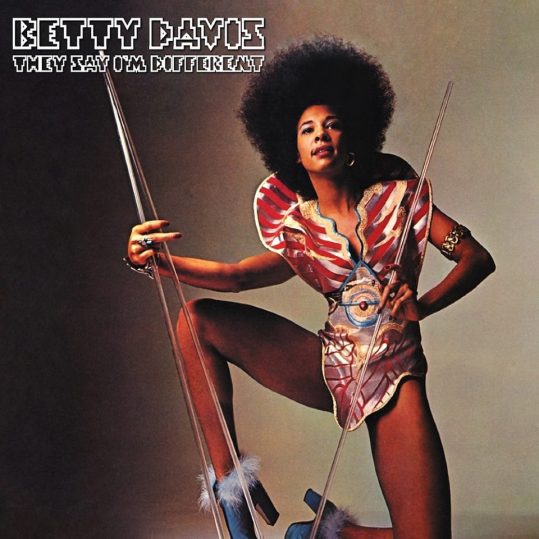
THEY SAY I’M DIFFERENT – Betty Davis – Just Sunshine Records – 1974

The world was not ready for Betty Davis.

Before Prince, Madonna, and Beyoncé were boldly owning race, gender, and sexuality in their music, there was Betty Davis: raw, explicit, and brazenly emancipated from everything expected of women in 1974.

At 16, Davis moved to New York, became a model and scenester, and fell into a crowd of friends and lovers that included Jimi Hendrix, Eric Clapton, and Miles Davis (whom she later married — for a year). After her debut album underperformed, she took full creative control and produced her follow-up entirely on her own. The result was They Say I’m Different: a bold, unfiltered album that exposes the power of a woman confident with her gender, race, and sense of self.

In this episode, we discuss the impact of this album on society: how it fit into the time it was released, and how it has influenced artists today, both musically and politically.

We recorded this episode on Sunday, just hours before this year’s Grammys, as we waited anxiously for Beyoncé’s masterpiece Lemonade to be deservedly rewarded. The album is a clear continuation of Betty’s legacy: aggressively independent, proudly black, profoundly female, and willing to take names of those who object; the words Betty growls on 1974’s “Don’t Call Her No Tramp” are echoed in Beyoncé’s howl on 2016’s “Don’t Hurt Yourself.”

It’s the kind of music that can scare people. Betty’s provocativeness led to her mainstream demise, but she laid the groundwork for women like Beyoncé who came after her. When we recorded this episode, we were excited for this to be a way to say “Look how far we’ve come.” Instead, the results of this year’s Grammy ceremony showed us that, 42 years later, this kind of music still scares people, and we still have a long way to go.

Listen to They Say I’m Different: iTunes | Spotify | YouTube

Subscribe on iTunes 

Episode notes and postscript corrections

  • This is pretty much everything that was happening in music in 1974.
  • Shoutout to ABBA.
  • Shoutout to CBGB’s first year.
  • Betty Davis was married to Miles Davis from 1968 to 1969, and is often credited with introducing him to the emerging psychodelic rock scene (particularly through her friend, Jimi Hendrix), and inspiring his genre-changing album Bitches Brew.
  • A clear line from Betty Davis to Beyoncé can be drawn for more than one of their shared characteristics. We are definitely not the only ones who think so.
  • Here are the lyrics to He Was a Big Freak. Maybe don’t open them up on your work computer if your boss is around.
  • Betty Davis and Jimi Hendrix were close friends. So close, that Miles Davis thought they were having an affair, even though Betty was pushing for the two to work together. Ultimately, Hendricks died before any collaboration could take place. 
  • If you know what the instrument from the intro to “Don’t You Call Her No Tramp” is, let us know. Hit us up: @77MusicClub on Twitter or 77musicclub@gmail.com and always feel free to get in touch.
  • Peep the related articles below to read in full what the New York Times had to say about Betty in 1974.
  • Most people had a strong reaction to Betty’s music in her heyday — but not always in a good way. The NAACP wanted radio to ban her songs and called her “a disgrace to her race.” She did not react kindly to this.
  • Peep all the name drops in “They Say I’m Different” with the full lyrics here.

Favorite track: Special People (Carly) | Shoo-B-Doop and Cop Him (Carrie)
Least favorite track: 70s Blues (Carly) | 70s Blues (Carrie)

Album credits:

  • Betty Davis – Producer, Vocals
  • Debbie Burrell – Vocals
  • Elaine Clark – Vocals
  • Mary Jones – Vocals
  • Trudy Perkins – Vocals
  • Mike Clark – Drums
  • Nicky Neal – Drums, Vocals
  • Willy Sparks – Drums, Vocals
  • Ted Sparks – Drums
  • Pete Escovedo – Timbales
  • Victor Pantoja – Congas, Percussion
  • Errol “Crusher” Bennett – Percussion
  • Buddy Miles – Guitar
  • Jimmy Godwin – Guitar
  • Cordell Dudley – Guitar, Vocals
  • Carlos Morales – Guitar, Vocals
  • Larry Johnson – Bass
  • Merl Saunders – Electric Piano
  • Fred Mills – Keyboards, Vocals
  • James Allen Smith – Keyboards
  • Hershall Kennedy – Clavinet, Keyboards, Organ, Electric Piano, Trumpet, Vocals
  • Tony Vaughn – Bass (Vocal), Clavinet, Keyboards, Piano, Electric Piano, Vocals
  • Mel Dixon – Photography
  • Bob Edwards – Assistant Engineer
  • Tom Flye – Mixing
  • Ron Levine – Cover Design
  • Bill Levy – Art Direction

Further watching:
Nasty Gal: The Many Lives of Betty Davis — documentary coming soon

Further reading:
Cult heroes: Betty Davis – blistering funk pioneer and female artist | The Guardian (July 2016)
Betty Davis: A Cult Genius Revealed, Once Again | MTV (July 2016)
Sleazy Listening: Betty Davis Rides Again | The New York Times T Magazine (November 2009)
Nasty Gal: Betty Davis | Dazed (July 2007)
A Funk Queen Steps Out of the Shadows | SFGate (May 2007)
The Pop Life | The New York Times (June 1974)

Episode 1: BUCKINGHAM NICKS

HOSTS’ NOTE: This podcast was born from an idea that predates the 2016 election. We kept pushing the release date back, thinking, “Does anyone really want to listen to a music podcast right now?” The answer to that will probably change daily, but the conclusion we came to is this: art is not going to stop. We will not stop auditioning, playing music, writing, or following any of our other passions. We need the arts — the joy, escapism, and enlightenment they bring — now more than ever. The albums we love will play on, so we will continue to talk about them. We are sure there will be times in the future when it feels trite to do this, but as long as music heals and uplifts, we’ve got a podcast to bring to you.

“Does anyone remember laughter?” — Robert Plant

bn

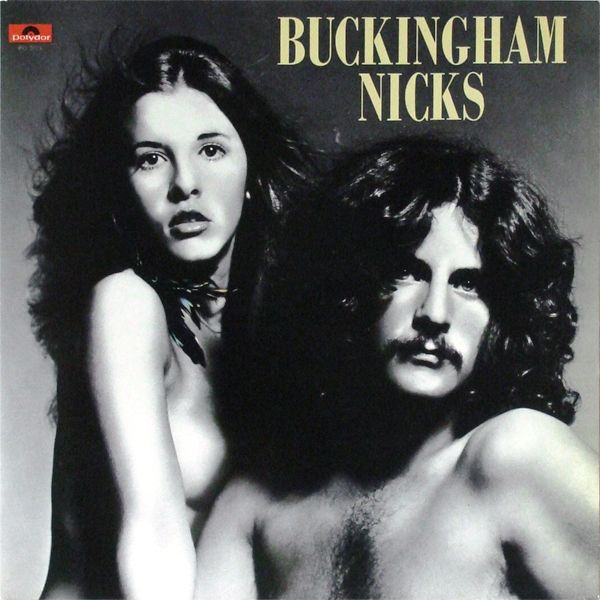
BUCKINGHAM NICKS – Buckingham Nicks – Polydor – 1973

Two years before joining Fleetwood Mac, Stevie Nicks and Lindsey Buckingham had no idea what lay ahead of them. They were just two kids who wanted to make great music — and they just happened to be in love.

A cult favorite of Fleetwood Mac fans, this album is curiously still only available on vinyl. While bootlegs of the album can be streamed on YouTube, it has never been (officially) released on cassette, CD, or to streaming services like Spotify. This is perhaps part of the attraction to the album — this is music that doesn’t outright present itself; it must be found.

In this episode, we discuss why we both call this album our favorite of all time, what makes it unique, and why it still takes our breath away hundreds of listens later.

Subscribe on iTunes

Episode notes and postscript corrections

  • Lindsey was already in high school band Fritz Rabyne Memorial Band (later shortened to Fritz) when Stevie was asked to join in mid-1967 to replace the lead singer.
    • From 1968 to 1971, Fritz was Stevie Nicks on lead vocals, Lindsey Buckingham on bass and vocals, Brian Kane on lead guitar, Javier Pacheco on keyboards, and Bob Aguirre on drums.
    • Listen to live recordings of Fritz here.
  • Buckingham Nicks was recorded at the now-iconic Sound City studios in the Valley, working closely with producer Keith Olsen and friend and engineer Richard Dashut.
    • Keith Olsen’s production credits include albums with artists like Fleetwood Mac, Grateful Dead, Rick Springfield, Joe Walsh, and more.
    • Richard Dashut went on to serve as a producer and engineer with Fleetwood Mac and Lindsey Buckingham from 1977 to 1995.
    • The Buckingham Nicks song “Crying in the Night” was the first song ever to be recorded on Sound City’s Neve analog console, known for its rarity, unique, warm sound, and extensive mixing capabilities. (This console now resides in Dave Grohl’s recording studio.)
  • The album cover imagery was shot by guitarist Waddy Wachtel’s brother, Jimmy, and features Stevie and Lindsey topless (but totally safe for work!). Stevie was hesitant to remove the expensive silk blouse she bought for the photoshoot with some of their last money. She was mortified that the final choice was one of the nude photos.
  • Listen to all three versions of Crystal (discussed 20 minutes in) and tell us which one is your favorite: Buckingham Nicks | Fleetwood Mac | Stevie Nicks 
  • A “simmering in the South” is definitely a way they described their cult following in Alabama — on more than one occasion.
  • About that European influence on “Long Distance Winner”… Stevie says it’s Greek, which, like, okay.
  • Buckingham Nicks went on a brief tour in the winter of 1974 before ending their live run with four shows in Birmingham, Tuscaloosa, and Jacksonville, Alabama in January 1975.
  • Stevie and Lindsey joined Fleetwood Mac on New Year’s Eve, 1974, after Mick Fleetwood extended an offer to Lindsey and he replied, “Well, you gotta take my girlfriend, too.” Initially thinking of the gig as a temporary way to make a little money, Buckingham Nicks continued to hold onto their brand, contributing background vocals and production credits on albums like Warren Zevon’s Warren Zevon, Walter Egan’s Fundamental Roll, and John Stewart’s Bombs Away Dream Babies until the success of Fleetwood Mac and Rumours pretty much decided their well-documented fate.

Favorite track(s): Crying in the Night & Frozen Love (Carly) | Frozen Love & Stephanie (Carrie)
Least favorite track: Lola (Carly) | Django (Carrie)

Album credits:

  • Lindsey Buckingham – vocals, guitars, bass guitar, percussion
  • Stevie Nicks – vocals

Additional personnel:

  • Waddy Wachtel – guitars
  • Jorge Calderón – percussion
  • Jim Keltner – drums
  • Jerry Scheff – bass guitar
  • Peggy Sandvig – keyboards
  • Richard Hallagan – string arrangement
  • Monty Stark – synthesizer
  • Mark Tulin – bass guitar
  • Ronnie Tutt – drums
  • Gary ‘Hoppy’ Hodges – drums, percussion

Production:

  • Producer and engineer: Keith Olsen
  • Executive producer: Lee Lasseff
  • Assistant engineer: Richard Dashut

Further watching:
Sound City documentary trailer
Stevie Nicks’s solo performance of “Crying in the Night” in 2016

Further reading:
How the Elusive ‘Buckingham Nicks’ Established Stevie Nicks’s Songwriting Voice | NPR Music (January 2018) ed note: this is by Carrie so we’re a lil biased
Stevie Nicks and Lindsey Buckingham made a fine pop record pre-Fleetwood Mac | AV Club (Sept. 2015)
How Sound City Rocked Dave Grohl’s World | The Wall Street Journal (Jan. 2013)
Recording Studios May Die, but the False Mythology Around Them May Not[on Sound City] | The Atlantic (Dec. 2012)
Buckingham Nicks reveal future plans in interview | Birmingham After Dark (Feb. 1975)