Episode 6: #1 RECORD

Big-Star-1-Record

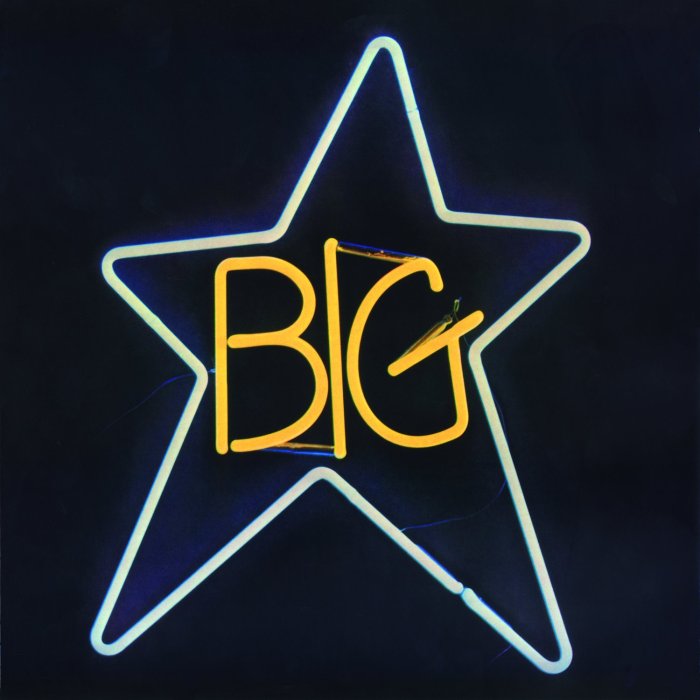
#1 Record – Big Star – Ardent Records – 1972

Towards the end of 1971, four young men from Memphis — some established musicians already, some just starting out — came together to record their debut album. Known collectively as Big Star, they delivered a set of songs that were at once intensely intimate and emphatically exuberant. Their music depicted how it feels to have boundless energy with limited places to spend it, coupled with curious, angst-ridden minds in search of kindreds. It is music that encapsulates the essence youth, yet remains universal and relatable at any age. It’s music that is very much of its time, yet still sounds fresh today.

Their debut album, #1 Record, was released in the summer of 1972, and was followed by two more albums in the 1970s before the group disbanded, never reuniting until nearly two decades later. Big Star has since influenced some of today’s most enduring and celebrated artists; publications like Rolling Stone consistently rank the group’s albums among the greatest of all time, so the question must be asked: why is Big Star not a household name?

In this episode, we discuss #1 Record‘s origins, influences, and what kept it from commercial success. We also talk about why it is so personal to us, and why it’s the kind of music that, once found, cannot be forgotten.

Listen to #1 Record: iTunes | Spotify | YouTube

Subscribe on iTunes

Episode notes and postscript corrections

  • Here’s a more thorough timeline of the formation and evolution of Big Star.
  • We highly recommend the documentary Big Star: Nothing Can Hurt Me. See our further watching links below to watch the trailer and where to find it online
    • Here’s that Twitter thread on the rest of our favorite music docs that we mentioned. Check out ones you haven’t seen yet, or just rewatch some perennial faves.
  • Big Star has been called one of the pioneers of “‘70s power pop,” and, a full definition of what exactly that sub-genre is (because, to be honest, we were a little “okay, clarification, please” when we read this) can be found here.
  • “The Ballad of El Goodo” has been seen in some instances as a Vietnam War protest song, primarily due to these lyrics: “They’ll zip you up and dress you down and stand you in a row / But you know you don’t have to, you can just say no.”  
  • Yes, “In the Street” is the That ‘70s Show theme song.
    • Yes, they actually used a Cheap Trick cover version.
    • Again, no offense to any That ‘70s Show fans or anyone who worked on it, but we did not watch that show. So, sorry, this will be a relatively That ‘70s Show-free podcast.
  • Studio banter is the key to our hearts. 
  • Chris Bell’s struggles with depression, anxiety, and sexuality have been speculated upon for years after his death, and “Try Again” can be seen as a window into his “tortured soul.”
  • Big Star influenced a host of modern artists, from Elliott Smith and M. Ward to Wilco and REM. Follow us on Spotify — our master playlist has all the songs we referenced in this episode, along with some choice related music to draw out these comparisons.
  • Feel free to get in touch with us! We have had some great conversations so far. We have an ever-evolving FAQ page here, but shoot us an email, like and message on Facebook, and follow on Twitter to get at us with your questions, comments, or just a “hello!”

Favorite track(s): Watch the Sunrise (Carly) | Feel (Carrie)
Least favorite track: The India Song (Carly) | The India Song (Carrie)

Album credits:
Chris Bell – vocals, guitar
Alex Chilton – vocals, guitar
Andy Hummel – vocals, bass guitar
Jody Stephens – drums
Terry Manning – electric piano, harmony vocals

Further watching:
Thank You, Friends: Big Star’s THIRD Live trailer | April 2017
Big Star: Nothing Can Hurt Me trailer | 2012 | Currently available to stream on Amazon

Further reading:
Big Star: #1 Record/Radio City rerelease review | Pop Matters (October 2014)
The Ballad of Big Star | Grantland [ed. note: RIP, Grantland. We miss you.] (July 2013)
The 10 Best Big Star Songs | Stereogum (September 2012)
Depression, Quaaludes, and the Wildest TGI Fridays in America: The Real Story of Big Star | Noisey (March 2012)
You’ve Never Heard Big Star’s ‘#1 Record’?! | NPR (June 2011)
Big Star: The Unluckiest Band in America | NPR (February 2010)

Episode 5: THE SLIDER

t-rex-the-slider

THE SLIDER – T. Rex – T. Rex (UK)/Reprise (USA) – 1972

By 1972, British music had fully renewed itself on the American scene in the form of glam rock. David Bowie, Slade, and Roxy Music were all part of this musical landscape that Marc Bolan and his band T. Rex expanded and exemplified. Glitter, platform boots, sci-fi imagery, and ’50s rock n’ roll roots made this sub-genre exciting, fresh, and new to kids of the ’70s who may not have realized that this was the rock n’ roll of Chuck Berry, Howlin’ Wolf, and Little Richard — just amped up and fuzzed out for the new generation.

T. Rex’s album The Slider made full use of all of these elements to create a vibe that spoke to a new generation of rock fans. The album was the pinnacle of the dreamworld that Marc Bolan created, and it leaves us spellbound more than 40 years later. In this episode, we theorize over some extremely poetic lyrics, attempt to decode Bolan, introduce a new hashtag (#RespectTheSequence), and somehow, somehow connect T.Rex to DJ Khaled.

Listen to The Slider: iTunes | Spotify | YouTube

Subscribe on iTunes

Episode notes and postscript corrections

  • We sound better! Thanks to our friend Jesse Berney for the mic recommendation.
  • We’re on Facebook! Like and follow us here, or just search for us. We are literally the only thing that comes up when you search 77 Music Club.
    • We’re also on Twitter! We tweet fun things! Follow us!
    • Last shameless self-promotion bit: follow us on Spotify, where we host a master playlist with all the songs we reference in each episode
  • Here’s a summary of how T. Rex morphed from psychedelic folk group Tyrannosaurus Rex to glam rock T. Rex.
  • “Ride a White Swan” was T. Rex’s real breakthrough to glam rock in 1970.
  • Pitchfork placed “Metal Guru” at 154 on their best 200 songs of the 1970s (more about that later) — read what they had to say about it here.
  • Our last episode highlighted a band whose method was music first, then lyrics. With Marc Bolan, the lyrics came first, then the music. When met with criticism that T. Rex’s music was often repetitive or formulaic in composition, Bolan explained that this was intentional: the music needed to remain simple to let his complex lyrics shine.
  • “The Slider” definitely references drugs, definitely has exaggerated coke sniffing lines, and allusions to growing pot. Just @ us if you think we’re wrong, but it screams “Hm, do you get high? Do you? I don’t know, why don’t you tell us more.”
  • Marc Bolan’s lyrics are bonkers poetry and we absolutely love them. Just read “Baby Boomerang” and see for yourself.
    • The songs were mostly nonsense, but rather than sounding like gibberish, Bolan seemed to be speaking in an alien code that, to this today, we’re still not cool enough to decode.” — Pitchfork, getting something right in their deeply flawed (our opinion) 200 Best Songs of the 1970s list.
    • The Shins covered “Baby Boomerang” in 2004 and you should definitely give it a listen.
  • Anyway, here’s “Spaceball Ricochet.”
    • Part of punk rock’s merits was that it heralded in a greater acceptance of songs that weren’t joyous or pompous, rather, songs that were real, songs that were honest about insecurities in their lyrics and weren’t pretending to be cool. We think “Spaceball Ricochet” stands as a precursor to the genre; we’d love to know your thoughts on this hypothesis.
  • Listen to “Buick McCane.” Then listen to the Black Keys. (They’re both in our playlist; and, actually, it’s been noticed more than once that they wrote a song that is basically “Mambo Sun,” so.) Let us know if you think they could totally kill a T. Rex cover.
  • “Telegram Sam” is about Marc Bolan’s accountant, not his drug dealer. Sorry.
  • Can anyone tell us what “Rabbit Fighter” is about? Because we are truly stumped.
  • If “Ballrooms of Mars” sounds like a very Bowie-esque title (and song), don’t be surprised— Bowie and Bolan were bros.

Favorite track(s): Telegram Sam and Ballrooms Of Mars (Carly) | Metal Guru (Carrie)
Least favorite track: Rabbit Fighter (Carly) | Rabbit Fighter (Carrie)

Album credits:
Marc Bolan – vocals, guitar
Steve Currie – bass guitar
Mickey Finn – percussion, vocals
Bill Legend – drums
Mark Volman (“Flo”) – background vocals
Howard Kaylan (“Eddie”) – background vocals
Tony Visconti – production, sleeve photography, string arrangements
Ringo Starr – sleeve photography
Dominique Blanc Francard – engineering
Freddy Hansson – engineering
David Katz – orchestra contractor
Andy Scott – engineering assistance
Mark Paytress – liner notes
Chris Welch – liner notes

Further watching:
T. Rex – Get It On (Bang a Gong) on Top of the Pops | 1971 (Note: Bolan wears glitter under his eyes in a move that many music historians credit as the ushering in of glam rock)
T. Rex in Concert – Wembley | March 1972
Marc Bolan-Russell Harty interview | 1972

Further reading:
The Slider reissue review | Consequence of Sound (October 2010)
The Slider reissue review | Pop Matters (December 2010)
The Slider box set review | The Quietus (December 2012
The 10 Best T. Rex songs | Stereogum (June 2013)
Revisiting a Glam Milestone, T. Rex’s The Slider | Ultimate Classic Rock (July 2012)
The T. Rex Wax Co. Singles review | Pitchfork (January 2006)

Episode 4: TOM TOM CLUB

tom-tom-club

TOM TOM CLUB – Tom Tom Club – Sire Records – 1981

The year is 1981 and pop culture is exploding around the world — Raiders of the Lost Ark premieres, the wreckage of the Titanic is found, and Lady Diana Spencer marries Charles, Prince of Wales. The music industry is coming out of one of its worst slumps in decades, dealing with the backlash against disco music, and tucked away at Compass Point Studios in the Bahamas, bassist Tina Weymouth and drummer Chris Frantz of the Talking Heads record their first album as Tom Tom Club.

The album will become one of the most popular post-disco dance records of the ’80s and gross more than any of the four albums Talking Heads had released to that point. It incorporates international musical techniques and influences, giving the songs a flavor that expands the post-punk art rock sound Tina and Chris had established with Talking Heads, and sets the tone for the new directions that they would take in their musical careers.

While this album can definitely be dated to the early ’80s, we are in love with how it simultaneously sounds fresh and exciting to our millennial ears. In this episode, we explore the sound combinations that make this album the joyous thing that it is, discuss its legacy and relevance, and speak about why Tina Weymouth and Chris Frantz are two artists who inspire us big time.

Listen to Tom Tom Club: iTunes | Spotify | YouTube

Subscribe on iTunes

Episode notes and postscript corrections

  • Here’s a brief timeline of Tom Tom Club’s formation and growth.
  • Tom Tom Club’s first album was not only a greater commercial success than the previous Talking Heads albums; they partially credit it with giving Talking Heads new life when a split seemed imminent.
  • Chris Blackwell is a real MVP and a true BAMF.
  • The chorus of “Wordy Rappinghood” is a riff on the Moroccan childhood tune “A Ram Sam Sam,” and, if you grew up in the ‘90s (or raised kids then), this version might ring a bell.
  • This documentary short on “Wordy Rappinghood” explains everything, in their own words (and, by the way, we could totally go for one of these for each song on this album…)
  • Some (very brief) notes on the origins of early rap:
    • Rap’s origin is based around NYC block parties uptown in the early ‘70s, but it wasn’t something people took seriously — commercially, at least — until the Sugarhill Gang’s “Rapper’s Delight” in 1979 and Kurtis Blow’s “The Breaks” in 1980.
    • Meanwhile, downtown, Blondie released “Rapture” in 1981, which was Billboard’s first #1 rap song, as well as the first rap video to play on MTV, opening the door for a broader interpretation of rap from a new musical community.
    • Here’s a little starter guide about the birth of rap.
  • Everyone and their mother knows “Genius of Love” and if you don’t, you’ve probably spent your life in a cave (sorry, but honestly…), because about a million artists have sampled or covered it.
  • This two and a half hour lecture with Chris and Tina at the Red Bull Music Academy is so thorough and comprehensive and pure geek heaven, and, at the same time, not nearly enough — it makes you (okay, us) want to have a longer conversation and soak in their knowledge and experiences even more.
  • Peep our ‘Further watching’ links below to watch two must-see performances of “Genius of Love” — one, a grand production from Stop Making Sense, the other, a sparse, acoustic performance from NPR’s Tiny Desk.
  • Listen to “Lorelei.” Then listen to “Suboceana” (from their third album, Boom Boom Chi Boom Boom). Repeat. Tell us if you agree with Carly’s belief that they are sister songs (we love sister songs).
    • “Lorelei” sounds like a song that would be a Pitchfork fave if it were released today, and makes us think of a slew of artists who are influenced by Tom Tom Club, from Tennis to Vampire Weekend to Haim (fun fact: Este Haim decided to switch from guitar to bass after watching Tina in Stop Making Sense) to Jenny Lewis (in all incarnations: solo, with Rilo Kiley, or with Nice As Fuck)
    • Honestly, we just really want a Jenny Lewis – Tom Tom Club cover session to happen.
  • “On, On, On, On” is the new resistance anthem, pass it on.
    • Again, another Nice As Fuck-y song — play NAF’s “Door” video. Play it again on mute with “On, On, On, On” playing in the background.
  • Pssttt — follow us on Spotify to hear all the songs we discuss on this episode that influenced and were influenced by Tom Tom Club in our ongoing master playlist.
  • A brief history of Tina Weymouth and Chris Frantz being cool as hell:
    • This 1983 feminist bop called “This is a Foxy World” that is also our new resistance anthem (although we lament that it’s still a spot-on critique of today’s society)
    • On the “being a woman in rock” trope (circa 1984)
    • Being prescient as hell about the changing music industry in 1999 (scroll to the part about $50 concert tickets — we would love to know what they think about the whole $500 VIP ticket racket that’s prevalent today).
    • This.
    • This badass segment in the “Girls in Bands” doc (starts around 27:30), but mostly this here-for-this-write-this-down-and-frame-it moment: “If you want to do something, just do it. Don’t talk about it — and don’t criticize other women. If they want to go out and swing on a wrecking ball naked, why not? Let them do what they want. We’re just smart, as women, because we have our balls neatly tucked inside where they’re protected, and that’s that.” 
  • Here’s just one piece of context to what we mean when we describe “Booming and Zooming” as a Brian Eno-esque track.
  • The original vinyl album was rereleased with a cover of The Drifters’ “Under the Boardwalk” replacing “Booming And Zooming” as the final track.
  • Tom Tom Club became their full-time band after the Talking Heads split up; their most recent album, Downtown Rockers, was released in 2012.
  • We’re up on our legacy soapbox again and we would love to talk with you about how, as millennials, we want to make sure music that came before us lives on forever — email us, follow us on Facebook (thanks to everyone who asked if they could find us there — we’re on the ‘book now), or tweet at us
  • We are passionate about classic music that has legs beyond its era of origin, and established artists that continue to grow and expand and embrace new technologies and stay in touch with new generations of listeners. Tom Tom Club does this, and they have our utmost respect for that.

Favorite track(s): Genius of Love (Carly) | Wordy Rappinghood and Genius of Love (Carrie)
Least favorite track: Booming And Zooming (Carly) | Booming And Zooming (Carrie)

Album Credits:
Adrian Belew – Guitar
Chris Frantz – Drums, Co-Producer
Tina Weymouth – Bass, Vocals, Co-Producer
Monte Browne – Guitar
Tyrone Downie – Keyboards
Uziah “Sticky” Thompson – Percussion
Lani Weymouth – Vocals
Laura Weymouth – Vocals
Steven Stanley – Co-Producer, Engineer
Benji Armbrister – Engineer
Kendall Stubbs – Engineer
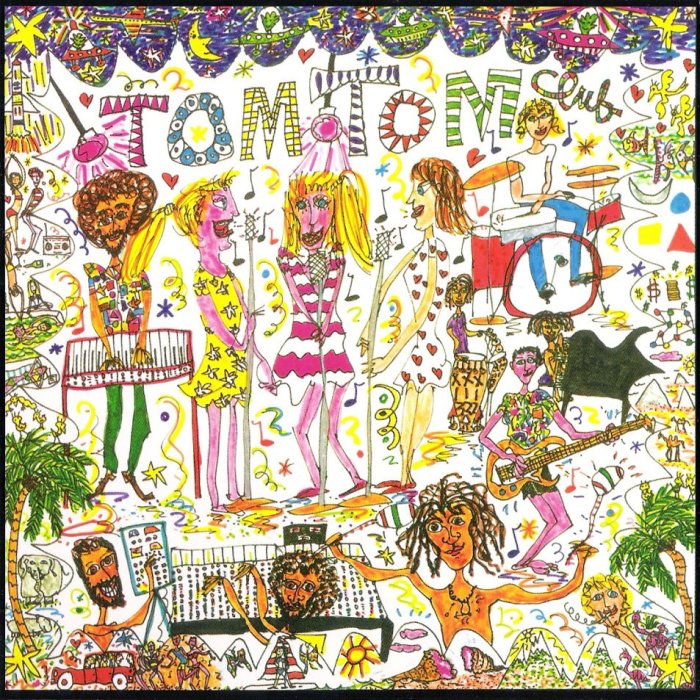
James Rizzi – Cover art

Further watching:
Tom Tom Club: Red Bull Music Academy Tokyo lecture | November 2014
Tom Tom Club: NPR Tiny Desk Concert | October 2010
Wordy Rappinghood doc | 2009
Genius of Love (Stop Making Sense) | December 1983

Further Reading:
Tina Weymouth Writes a Letter to Her Younger Self | i-D [Vice] (January 2017)
The Best 200 Songs of the 1980s | Pitchfork (August 2015)
Rockers Chris Frantz and Tina Weymouth Talk Marriage | Rolling Stone (July 2013)
How We Met: Chris Frantz and Tina Weymouth | The Independent (March 2013)
Talking Tom Tom Club: Chris Frantz and Tina Weymouth Interviewed | The Quietus (July 2011)

“OKAY, BYE!”

Episode 3: ABANDONED LUNCHEONETTE

abandoned-luncheonette

ABANDONED LUNCHEONETTE – Hall and Oates – Atlantic Records – 1973

Hall & Oates’ Abandoned Luncheonette was the second album that the duo released during their formative years at Atlantic Records. Containing “She’s Gone,” one of their biggest and most recognizable hits, the album does not have a genre that is easy to pinpoint. Part folk, part rock, part soul, the meshing of sounds and instrumentation techniques make this album one that is unique to its time period and resonant to modern listeners.

In this episode, we talk about the legacy of this record and why young listeners can find as much to love within its album sleeves as those who have enjoyed it for decades. We also have some side discussions on the merits of dad rock, saxophones, and instruments as characters, and we reveal the name of our favorite local record store.

Listen to Abandoned Luncheonette: iTunes | Spotify | YouTube

Subscribe on iTunes 

Episode notes and postscript corrections

  • Debate amongst yourselves: Is Hall and Oates dad rock or mom rock, one, and two, what is the differentiator between the two?
  • Abandoned Luncheonette was their second album, but the first album Hall and Oates made upon moving to New York from Philadelphia. After their first album failed to perform, they felt they had nothing to lose — thus, the melting pot of influences all on one album.
    • Other people who recorded at Atlantic Studios at the same time: Bette Midler, Aretha Franklin, Bob Dylan, and Led Zeppelin, which blew Hall and Oates’ minds.
  • “Had I Known You Better Then” had a great live version on Daryl Hall’s TV show, “Live from Daryl’s House” — see the further viewing below.
  • Somehow we made a Father John Misty reference and it works. (Here’s why.)
  • About that rando music video for “She’s Gone”…
    • MTV wasn’t created until 1981, so if you’re like “wait, they had a video,” you’re not alone.
    • Pitchfork included the video for “She’s Gone” in their 25 Best Music Videos of the 1970s, because it is a head scratcher. 
    • John Oates claims he leaked it to YouTube, which, like, okay. You should watch it below in our further watching section.
  • Given guitarist/not-quite-producer-but-influential-nonetheless Chris Bond’s Beatles-affinity, the use of horns on “Laughing Boy” isn’t surprising. They can be compared to The Beatles’ “For No One” — an instrument used almost as a way to echo the narrator’s mind. (It works better for Paul McCartney.)
  • Follow us on Spotify and we’ll hit you with that comparison between “Everytime I Look at You” and Joni Mitchell’s “Trouble Child.”
  • Speaking of legacy and influence, The Bird and the Bee recorded an entire album of Hall and Oates covers in 2010.
  • The Chocolate Watchband, the band that Carly mentioned she discovered on Spotify and thought was a new band, only to find that they were from the late ’60s, was a San Francisco band that was active in the Bay Area at the same time as Fritz, Stevie Nicks’s and Lindsey Buckingham’s pre- Buckingham Nicks band.
  • We would really love to talk to you about how millennials can all carry the torch for old music. Like, would really, really love to talk to you about it.

Favorite track: When The Morning Comes (Carly) | When The Morning Comes (Carrie)
Least favorite track: Laughing Boy (Carly) | Las Vegas Turnaround & I’m Just a Kid (Don’t Make Me Feel Like a Man) (Carrie)

Album credits:
Daryl Hall – lead vocals, mandolin, electric piano, keyboards
John Oates – lead vocals, acoustic guitar, wah-wah guitar
Joe Farrell – oboe, tenor saxophone, alto saxophone
Hugh McCracken – electric guitar
Chris Bond – mellotron, electric guitar, synthesizer
Steve “Fontz” Gelfand – bass
Bernard Purdie – drums
Ralph MacDonald – percussion
Jerry Ricks – acoustic guitar
Rick Marotta – drums, percussion
Gordon Edwards – bass
Richard Tee – piano
Gloria Agostini – harp
John Blair – electric vi-tar
Marvin Stamm – flugelhorn
Larry Packer – fiddle
Mark Horowitz – banjo
Arif Mardin, Christian Bond, Donald Wanner, John Oates, Kathy Mae Hohl, Ronald Wanner, Walter F. Hohl – “humanity chorus”

Produced by Arif Mardin
Production Assistant: Christopher Bond
Recording & Engineering: Alan Ade, Jimmy Douglass, Lewis Hahn, Joel Kerr, Gene Paul
Recorded at Atlantic Recording Studios and Advantage Sound Studios (New York, NY)
Mixing: Christopher Bond, Jimmy Douglass
Mastered By Stephen Innocenzi at Atlantic Recording Studios
Album Design and Photography: B. Wilson
Coordinator: Tommy Mottola

Further watching
“Had I Known You Better Then” from Live from Daryl’s House (2008)
“She’s Gone” — original music video from 1973

Further reading
How Hall and Oates Found Themselves on Abandoned Luncheonette | Ultimate Classic Rock (November 2015)
Graded on a Curve: Hall & Oates, Abandoned Luncheonette | The Vinyl District (February 2014)
Hall & Oates: 40 Years of Abandoned Luncheonette | American Songwriter (February 2013)
The Story of the Abandoned Luncheonette, AKA the Rosedale Diner | Diner Hotline Weblog (August 2010)
Hall and Oates, Abandoned Luncheonette | Pop Matters (June 2007)
Hall and Oates: The Self-Righteous Brothers | Rolling Stone (January 1985)

Episode 2: THEY SAY I’M DIFFERENT

bettydavis

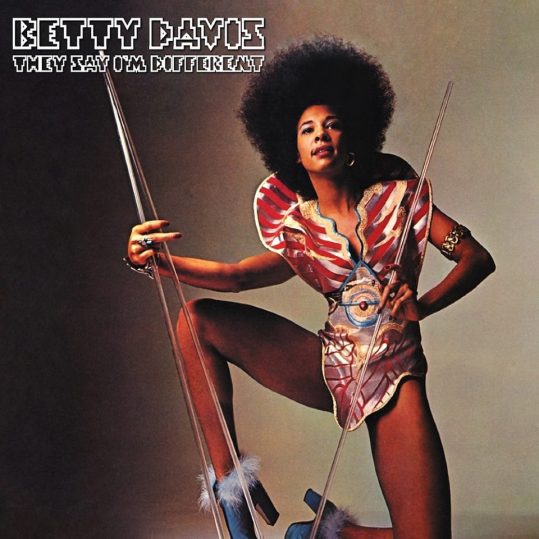
THEY SAY I’M DIFFERENT – Betty Davis – Just Sunshine Records – 1974

The world was not ready for Betty Davis.

Before Prince, Madonna, and Beyoncé were boldly owning race, gender, and sexuality in their music, there was Betty Davis: raw, explicit, and brazenly emancipated from everything expected of women in 1974.

At 16, Davis moved to New York, became a model and scenester, and fell into a crowd of friends and lovers that included Jimi Hendrix, Eric Clapton, and Miles Davis (whom she later married — for a year). After her debut album underperformed, she took full creative control and produced her follow-up entirely on her own. The result was They Say I’m Different: a bold, unfiltered album that exposes the power of a woman confident with her gender, race, and sense of self.

In this episode, we discuss the impact of this album on society: how it fit into the time it was released, and how it has influenced artists today, both musically and politically.

We recorded this episode on Sunday, just hours before this year’s Grammys, as we waited anxiously for Beyoncé’s masterpiece Lemonade to be deservedly rewarded. The album is a clear continuation of Betty’s legacy: aggressively independent, proudly black, profoundly female, and willing to take names of those who object; the words Betty growls on 1974’s “Don’t Call Her No Tramp” are echoed in Beyoncé’s howl on 2016’s “Don’t Hurt Yourself.”

It’s the kind of music that can scare people. Betty’s provocativeness led to her mainstream demise, but she laid the groundwork for women like Beyoncé who came after her. When we recorded this episode, we were excited for this to be a way to say “Look how far we’ve come.” Instead, the results of this year’s Grammy ceremony showed us that, 42 years later, this kind of music still scares people, and we still have a long way to go.

Listen to They Say I’m Different: iTunes | Spotify | YouTube

Subscribe on iTunes 

Episode notes and postscript corrections

  • This is pretty much everything that was happening in music in 1974.
  • Shoutout to ABBA.
  • Shoutout to CBGB’s first year.
  • Betty Davis was married to Miles Davis from 1968 to 1969, and is often credited with introducing him to the emerging psychodelic rock scene (particularly through her friend, Jimi Hendrix), and inspiring his genre-changing album Bitches Brew.
  • A clear line from Betty Davis to Beyoncé can be drawn for more than one of their shared characteristics. We are definitely not the only ones who think so.
  • Here are the lyrics to He Was a Big Freak. Maybe don’t open them up on your work computer if your boss is around.
  • Betty Davis and Jimi Hendrix were close friends. So close, that Miles Davis thought they were having an affair, even though Betty was pushing for the two to work together. Ultimately, Hendricks died before any collaboration could take place. 
  • If you know what the instrument from the intro to “Don’t You Call Her No Tramp” is, let us know. Hit us up: @77MusicClub on Twitter or 77musicclub@gmail.com and always feel free to get in touch.
  • Peep the related articles below to read in full what the New York Times had to say about Betty in 1974.
  • Most people had a strong reaction to Betty’s music in her heyday — but not always in a good way. The NAACP wanted radio to ban her songs and called her “a disgrace to her race.” She did not react kindly to this.
  • Peep all the name drops in “They Say I’m Different” with the full lyrics here.

Favorite track: Special People (Carly) | Shoo-B-Doop and Cop Him (Carrie)
Least favorite track: 70s Blues (Carly) | 70s Blues (Carrie)

Album credits:

  • Betty Davis – Producer, Vocals
  • Debbie Burrell – Vocals
  • Elaine Clark – Vocals
  • Mary Jones – Vocals
  • Trudy Perkins – Vocals
  • Mike Clark – Drums
  • Nicky Neal – Drums, Vocals
  • Willy Sparks – Drums, Vocals
  • Ted Sparks – Drums
  • Pete Escovedo – Timbales
  • Victor Pantoja – Congas, Percussion
  • Errol “Crusher” Bennett – Percussion
  • Buddy Miles – Guitar
  • Jimmy Godwin – Guitar
  • Cordell Dudley – Guitar, Vocals
  • Carlos Morales – Guitar, Vocals
  • Larry Johnson – Bass
  • Merl Saunders – Electric Piano
  • Fred Mills – Keyboards, Vocals
  • James Allen Smith – Keyboards
  • Hershall Kennedy – Clavinet, Keyboards, Organ, Electric Piano, Trumpet, Vocals
  • Tony Vaughn – Bass (Vocal), Clavinet, Keyboards, Piano, Electric Piano, Vocals
  • Mel Dixon – Photography
  • Bob Edwards – Assistant Engineer
  • Tom Flye – Mixing
  • Ron Levine – Cover Design
  • Bill Levy – Art Direction

Further watching:
Nasty Gal: The Many Lives of Betty Davis — documentary coming soon

Further reading:
Cult heroes: Betty Davis – blistering funk pioneer and female artist | The Guardian (July 2016)
Betty Davis: A Cult Genius Revealed, Once Again | MTV (July 2016)
Sleazy Listening: Betty Davis Rides Again | The New York Times T Magazine (November 2009)
Nasty Gal: Betty Davis | Dazed (July 2007)
A Funk Queen Steps Out of the Shadows | SFGate (May 2007)
The Pop Life | The New York Times (June 1974)

Episode 1: BUCKINGHAM NICKS

HOSTS’ NOTE: This podcast was born from an idea that predates the 2016 election. We kept pushing the release date back, thinking, “Does anyone really want to listen to a music podcast right now?” The answer to that will probably change daily, but the conclusion we came to is this: art is not going to stop. We will not stop auditioning, playing music, writing, or following any of our other passions. We need the arts — the joy, escapism, and enlightenment they bring — now more than ever. The albums we love will play on, so we will continue to talk about them. We are sure there will be times in the future when it feels trite to do this, but as long as music heals and uplifts, we’ve got a podcast to bring to you.

“Does anyone remember laughter?” — Robert Plant

bn

BUCKINGHAM NICKS – Buckingham Nicks – Polydor – 1973

Two years before joining Fleetwood Mac, Stevie Nicks and Lindsey Buckingham had no idea what lay ahead of them. They were just two kids who wanted to make great music — and they just happened to be in love.

A cult favorite of Fleetwood Mac fans, this album is curiously still only available on vinyl. While bootlegs of the album can be streamed on YouTube, it has never been (officially) released on cassette, CD, or to streaming services like Spotify. This is perhaps part of the attraction to the album — this is music that doesn’t outright present itself; it must be found.

In this episode, we discuss why we both call this album our favorite of all time, what makes it unique, and why it still takes our breath away hundreds of listens later.

Subscribe on iTunes

Episode notes and postscript corrections

  • Lindsey was already in high school band Fritz Rabyne Memorial Band (later shortened to Fritz) when Stevie was asked to join in mid-1967 to replace the lead singer.
    • From 1968 to 1971, Fritz was Stevie Nicks on lead vocals, Lindsey Buckingham on bass and vocals, Brian Kane on lead guitar, Javier Pacheco on keyboards, and Bob Aguirre on drums.
    • Listen to live recordings of Fritz here.
  • Buckingham Nicks was recorded at the now-iconic Sound City studios in the Valley, working closely with producer Keith Olsen and friend and engineer Richard Dashut.
    • Keith Olsen’s production credits include albums with artists like Fleetwood Mac, Grateful Dead, Rick Springfield, Joe Walsh, and more.
    • Richard Dashut went on to serve as a producer and engineer with Fleetwood Mac and Lindsey Buckingham from 1977 to 1995.
    • The Buckingham Nicks song “Crying in the Night” was the first song ever to be recorded on Sound City’s Neve analog console, known for its rarity, unique, warm sound, and extensive mixing capabilities. (This console now resides in Dave Grohl’s recording studio.)
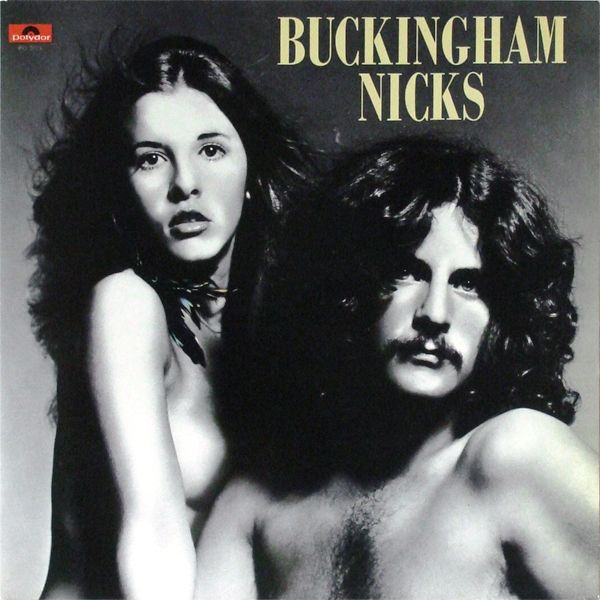
  • The album cover imagery was shot by guitarist Waddy Wachtel’s brother, Jimmy, and features Stevie and Lindsey topless (but totally safe for work!). Stevie was hesitant to remove the expensive silk blouse she bought for the photoshoot with some of their last money. She was mortified that the final choice was one of the nude photos.
  • Listen to all three versions of Crystal (discussed 20 minutes in) and tell us which one is your favorite: Buckingham Nicks | Fleetwood Mac | Stevie Nicks 
  • A “simmering in the South” is definitely a way they described their cult following in Alabama — on more than one occasion.
  • About that European influence on “Long Distance Winner”… Stevie says it’s Greek, which, like, okay.
  • Buckingham Nicks went on a brief tour in the winter of 1974 before ending their live run with four shows in Birmingham, Tuscaloosa, and Jacksonville, Alabama in January 1975.
  • Stevie and Lindsey joined Fleetwood Mac on New Year’s Eve, 1974, after Mick Fleetwood extended an offer to Lindsey and he replied, “Well, you gotta take my girlfriend, too.” Initially thinking of the gig as a temporary way to make a little money, Buckingham Nicks continued to hold onto their brand, contributing background vocals and production credits on albums like Warren Zevon’s Warren Zevon, Walter Egan’s Fundamental Roll, and John Stewart’s Bombs Away Dream Babies until the success of Fleetwood Mac and Rumours pretty much decided their well-documented fate.

Favorite track(s): Crying in the Night & Frozen Love (Carly) | Frozen Love & Stephanie (Carrie)
Least favorite track: Lola (Carly) | Django (Carrie)

Album credits:

  • Lindsey Buckingham – vocals, guitars, bass guitar, percussion
  • Stevie Nicks – vocals

Additional personnel:

  • Waddy Wachtel – guitars
  • Jorge Calderón – percussion
  • Jim Keltner – drums
  • Jerry Scheff – bass guitar
  • Peggy Sandvig – keyboards
  • Richard Hallagan – string arrangement
  • Monty Stark – synthesizer
  • Mark Tulin – bass guitar
  • Ronnie Tutt – drums
  • Gary ‘Hoppy’ Hodges – drums, percussion

Production:

  • Producer and engineer: Keith Olsen
  • Executive producer: Lee Lasseff
  • Assistant engineer: Richard Dashut

Further watching:
Sound City documentary trailer
Stevie Nicks’s solo performance of “Crying in the Night” in 2016

Further reading:
How the Elusive ‘Buckingham Nicks’ Established Stevie Nicks’s Songwriting Voice | NPR Music (January 2018) ed note: this is by Carrie so we’re a lil biased
Stevie Nicks and Lindsey Buckingham made a fine pop record pre-Fleetwood Mac | AV Club (Sept. 2015)
How Sound City Rocked Dave Grohl’s World | The Wall Street Journal (Jan. 2013)
Recording Studios May Die, but the False Mythology Around Them May Not[on Sound City] | The Atlantic (Dec. 2012)
Buckingham Nicks reveal future plans in interview | Birmingham After Dark (Feb. 1975)