Episode 2.4: TANGO IN THE NIGHT

tango-in-the-night

TANGO IN THE NIGHT – Fleetwood Mac – Warner Brothers – 1987

The year is 1986. Fleetwood Mac had not released a new album in four years. With the radio favoring younger and more heavily pop hits like “How Will I Know” and “Papa Don’t Preach,” they were considered middle-aged and washed up, like most of their late-60s and ‘70s breezy, FM rock peers, barely a blip on anyone’s radar.

The band members themselves were fractured. Stevie Nicks checked into rehab to deal with a cocaine addiction that, over the course of the past decade, had created a hole in her nose — by the end of the year, she would be in the early stages of a long addiction to Klonopin, the drug meant to keep her off the coke. Drummer Mick Fleetwood, who had declared bankruptcy two years earlier, was in the midst of an outrageously expensive cocaine addiction, while bassist John McVie was drinking heavily, and keyboardist Christine McVie was celebrating her new marriage. Guitarist Lindsey Buckingham was holed up in his home studio, obsessively at work on his next solo album.

The end result would not be Buckingham’s third solo album, but Fleetwood Mac’s fourteenth. A shimmering, painstakingly crafted labor of love produced by Buckingham over the course of 18 months, 1987’s Tango in the Night would become a sort of sister album to the impossible-to-top Rumours: a monolithic story of a band in the throes of self-destruction. Only this time, they weren’t all stubbornly persevering together; they were being held together, puppeted, even, by Buckingham as he coaxed an album from a band that, mostly, just wasn’t there. It would be the last studio album the iconic quintet ever recorded together.

In this episode, we discuss the qualities each distinct songwriter brings to the collective group, how Buckingham’s experimental production style helped make Tango so reflective of its time, and why we will never tire of this crazy family and all of their drama.   

Subscribe on iTunes

(ps — while you’re there, please rate and review us in the iTunes store so more people can discover us and we can all be friends who talk about music together!) 

Episode notes and postscript corrections

  • In case you didn’t have enough family drama this holiday, here’s an episode about your favorite lives-for-the-drama rock and roll band!
  • We don’t have 300 hours for our podcast, and the history of Fleetwood Mac, with all its various lineup changes and love affairs and stuff, is so long and complicated that it might take that long to explain. If you want to learn more history, there’s a really cool website called Google dot com.
  • Obviously, we recommend you revisit our very first episode on Buckingham Nicks, the album Stevie Nicks and Lindsey Buckingham made two years prior to joining Fleetwood Mac. It would be quite useful for your understanding of this album.
  • Lindsey Buckingham is a crazy mad scientist studio rat who loves to play with his toys and control almost everything about the production of anything he touches. See our further reading links below for more.
  • Discuss: Do the “oohs” and “aahs” that are really Lindsey pretending to be Lindsey and Stevie convince you that it is Lindsey and Stevie, or do you think it just sounds like Lindsey with a weirdly tuned voice?
  • Okay, honestly, you HAVE to watch this video of “Big Love” done acoustically. Warning: Your head might actually explode.
    • Still thinking “How the actual eff does one man do all that?” Watch this short interview where he explains his playing style and does “Big Love” ever so slightly slower so you can really see what’s happening.
  • …….We’ve gotta say it: This album is some of Stevie Nicks’s absolute worst when it comes to both singing and songwriting. We love her, but we do have to be honest and objective here.
  • “Everywhere” is an undeniable bop that will play about nine out of the ten times you are ever in a CVS anywhere. This is a fact.
    • Check out our master playlist on Spotify to hear examples of how “Everywhere” really does call back to Fleetwood Mac’s early blues-rock days, if you think about it.
    • Go ahead and file “Little Lies” under “Songs You Always Hear In Drug Stores,” too.
  • Okay, hear Carrie out. “Family Man” is Lindsey Buckingham trying so hard to be Talking Heads.
    • Funky bass-driven melody? Check. Danceable drum beat? Check. Basic lyrics about the mundanity of everyday life? Check. I mean, come on.
    • Granted, Lindsey is influenced by a multitude of sources (see: the Spanish-style guitar solos sprinkled throughout, the Beach Boys-esque harmonies), but his affinity for punk and new wave, and for boundary-pushing, has never been a secret.
      • This excerpt from a 1980 Rolling Stone cover story on Fleetwood Mac — in which Lindsey talks about his love of Fear of Music and John McVie is shocked to hear that there’s a married couple in Talking Heads — will never not be funny.
      • And here’s a 1987 review of Tango in Spin where the critic compares it to Talking Heads ‘77. So.
    • Agree? Disagree? Drop us a line. We love to nerd out about this stuff with others.
  • Stevie Nicks self-references and recycles lines in multiple songs all the time and we have SO. MANY. QUESTIONS, but it seems like there are so few answers. So, if you wanna get all English class analytical with us about it, you know where to find us.
  • Since 1987, Fleetwood Mac has produced only one new album of original material (2004’s Say You Will) and one four-track EP (2013’s Extended Play). Though Lindsey and Christine released an album as a duo this spring (it’s good, we recommend it), and the band continues to tour, it seems highly unlikely that we will ever see a final album from Fleetwood Mac, and we think, truthfully, that that is quite sad and disappointing.

Album credits:
Lindsey Buckingham — Guitars, keyboards, Fairlight CMI, lap harp, percussion and drum programming, vocals
Christine McVie — Keyboards, synthesizers, vocals
Mick Fleetwood — Drums, percussion
John McVie — Bass guitar
Stevie Nicks — Vocals

Favorite track(s): “Big Love” (Carly) | “Everywhere” and “Family Man” (Carrie)
Least favorite track(s): “When I See You Again (Carly) | “When I See You Again” (Carrie)

Further Watching:
Destiny Rules (truly the best Fleetwood Mac doc out there) | 2004
“Big Love” (acoustic, The Dance) | 1997
“Everywhere” (acoustic, The Dance) | 1997
“Seven Wonders” music video | 1987
Tango in the Night full concert | 1987
Lindsey Buckingham and Stevie Nicks Tango interview | 1987

Further Reading:
The real story behind Fleetwood Mac’s Tango in the Night (interview with co-producer Richard Dashut and engineer Greg Droman) | Salon (April 2017)
Tango in the Night re-release review | Pitchfork (March 2017) (ed note: this is one of Carrie’s favorite pieces ever written for Pitchfork and/or on Fleetwood Mac, so it comes highly recommended.)
Stevie Nicks: Recording Tango in my ex-boyfriend’s bedroom was ‘extremely strange’ | Miami Herald (March 2017)
Fleetwood Mac: ‘Everybody was pretty weirded out’ (scroll midway to get to Tango stuff) | Uncut (January 2013)  
Lindsey Buckingham Leaves Fleetwood Mac | Rolling Stone (September 1987)
Tango in the Night review | Rolling Stone (May 1987)
Lindsey Buckingham, Lonely Guy | Rolling Stone (October 1984)

Episode 2.3: MOONDANCE

van-morrison-moondance

MOONDANCE – Van Morrison – Warner Brothers – 1970

Sequestered away in Woodstock, New York, at the end of the 1960s, Northern Irish singer-songwriter Van Morrison was on a quest. His previous album, Astral Weeks, was floundering commercially, and no one knew quite what to make of this Celtic troubadour who sang of mysticism and “gardens all misty wet with rain.”

Out of this artistic sabbatical came 1970’s Moondance, an album that drew influences from blues, pop, and jazz to create a through line of music that was at once inherently accessible, and, as the ensuing decades would prove, universally relatable. Within these melodies, Morrison used imagery of his trademark gypsies and mists and dreams and stories, while placing them within frames of groove-able basslines, wistful guitars, and even trendy (for the period) flutes. This amalgamation of influences proved to be just the right combination that Morrison needed to cement himself within the lexicon of great singer-songwriters, and why Moondance has since gone on to become one of the best-loved albums ever recorded.

Subscribe on iTunes

(ps — while you’re there, please rate and review us in the iTunes store so more people can discover us and we can all be friends who talk about music together!) 

Episode notes and postscript corrections

  • We spared you a bunch of background info about Van Morrison’s pre-solo career and what happened when Astral Weeks was released, but if you want to learn more, there’s this cool thing called Google that will tell you all about it.
  • See our further reading notes below for more about that childhood memory that informed “And It Stoned Me.”
  • We’ve discussed our distaste for the flute before. IT RARELY WORKS.
    • Benmont Tench agrees with us. Here’s his opinion on the “Moondance” flute.
    • So, yeah. If someone could please get us and Benmont Tench a mix of “Moondance” done without the flute, we’d love you forever.
  • Check out our master playlist on Spotify to hear the similarities between “Crazy Love,” “Waiting on the World to Change,” and “People Get Ready” side by side.
  • Shoutout to John Klingberg, who is a true MVP on this album.
    • See our further watching links below for the can’t-be-missed performance of “Caravan” from The Band’s iconic 1978 concert film The Last Waltz
    • “Caravan” clocked in at 181 on Pitchfork’s 200 Best Songs of the 1970s list. We’ve discussed our displeasure with this list countless times throughout our episodes, but add the fact that only one Van Morrison song makes an appearance on it to the list of reasons why we think it needs an overhaul.
    • Fun fact: Nick Hornby wants the version from The Last Waltz played at his funeral. Here’s some good writing on how great this version is.
  • To really see how Morrison’s use of homophones can change the meaning of “Into the Mystic,” take a peek at the Genius lyrics.
  • Also check out our further watching links for the live cover version of “Into The Mystic” by Zac Brown Band and Clare Bowen.
  • For a refresher on how we each feel about non-sequitur, surprise songs in albums, revisit our discussion on “Before They Make Me Run” from the Rolling Stones’ Some Girls.
  • See our further watching links for this cool documentary where Van Morrison talks about and plays with John Lee Hooker, as well as that Fillmore East show.
  • And if anyone can get us more info about John Klingberg, that would be super cool. Thanks!
  • Okay, special exception to the flute thing with “Everyone.” It works there.

Album credits:
Van Morrison — Rhythm guitar, vocals, tambourine
Jack Schrorer — Alto and soprano sax
Collin Tillton — Tenor sax and flute
Jeff Labes — Piano, organ, and clavinette
John Platania — Lead and rhythm guitars
John Klingberg — Bass guitar
Garry Malabar — Drums and vibraphone
Guy Masson — Congo drum
Emily Houston — Backing vocals
Judy Clay — Backing vocals
Jackie Verdell — Backing vocals


Favorite track(s): “Into the Mystic” (Carly) | “Caravan” and “And It Stoned Me” (Carrie)
Least favorite track: “Brand New Day” (Carly) | “Come Running” (Carrie)

Further watching:
Van Morrison: Another Glorious Decade | 2003
Van Morrison Cue The Music TV documentary | 1991
Van Morrison and The Band – “Caravan” | The Last Waltz (1978)
Van Morrison live at Fillmore East | 1970

Further reading:
The Words and Music of Van Morrison | 2009
Celtic Crossroads: The Art of Van Morrison | 2003   

Moondance re-release review | The Au Review (October 2013) 
500 Greatest Albums of All Time – Moondance | Rolling Stone (May 2012)
Van Morrison: The Poet | Rolling Stone (November 1978)
Moondance review | Rolling Stone (March 1970)

Episode 2.2: URBAN VERBS

urban-verbs

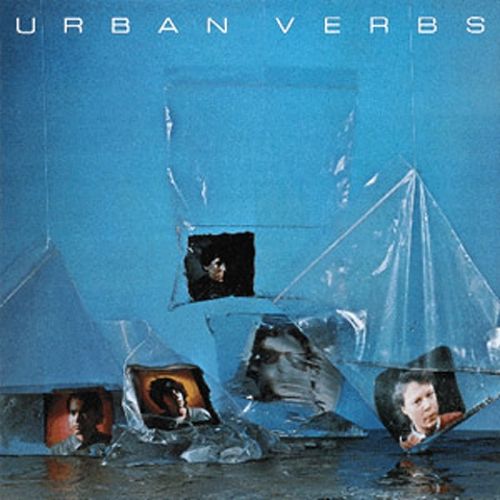
URBAN VERBS – Urban Verbs – Warner Brothers – 1980

In our very first oral history episode, we are extremely proud to present the story of Urban Verbs, an integral band in the shaping of Washington D.C.’s burgeoning punk scene in late 1970s and early 1980s.

With the frenetic energy of punk buzzing out of New York and London and the first bursts of post-punk already beginning to enter the airwaves, Urban Verbs stood at a crossroads of sonic and cultural possibilities. They had their own uncharted terrain on which they could create a scene of their own, with their own experimental sound: Their home base, the now-legendary 9:30 Club, spawned a singular new wave movement, one whose influence can still be felt among D.C. bands of today. Their unique meshing of the visual arts crowd with the music world helped to usher in a unification of the D.C. creative community.

Only circumstance separated the Verbs from widespread national acclaim, so with this episode, we offer a candid telling of a story that we feel deserves recognition, a story of music that still sounds as fresh, driving, and progressive today as the day it was recorded. These are the recollections of an extraordinary period in time, told by those who lived it.

Carly and Carrie would like to dedicate this episode to the memory of Robert Goldstein, whose music and essential contributions to the Verbs were a large part of the inspiration for this project.

Subscribe on iTunes

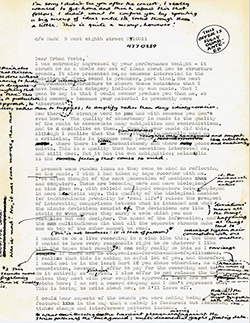
Here, shared with the public for the first time, is the detailed, two page letter legendary producer Brian Eno wrote to the Urban Verbs upon hearing them for the first time at CBGB. Delivered to the band the morning after the show and featuring extensive handwritten marginalia, the letter reflects Eno’s enthusiasm for their unique sound, the potential he heard in it, and his eagerness to record them — at his own expense.

In it, Eno is remarkably candid, mulling over ideas that seem dated now (“I’ve often thought of the next generation of machines and computers,” he muses) but were ahead of their time, offering suggestions and praise in equal amount. “That was how far I could go before getting embarrassed,” he concludes. “I realize that this gush might surprise you somewhat, but you came at a good time for me.” 

 BRIAN-ENO-URBAN-VERBS-LETTER-CBGB-1 BRIAN-ENO-URBAN-VERBS-LETTER-CBGB-2

Click to expand thumbnails
Thank you very much to Rod Frantz for sharing this document with us.

And here are the tracks Eno ended up producing for the Urban Verbs:

Episode notes and postscript corrections

  • Here’s a publicity still of the Urban Verbs from the late ‘70s that’s cool af.
  • Here’s some extensive info about the ARP Odyssey synthesizer Robin Rose used.
  • While the Verbs were pioneers in the D.C. rock scene, this article from D.C. Whiz highlights some of their contemporaries, including the Slickee Boys, mentioned in this episode.
  • For a taste of what the B-52s were like around the time they played with the Urban Verbs, check out this in-depth look at their early days.
  • Here’s some more info on Mike Thorne’s career.
  • The Washington Post covered the Urban Verbs extensively in their D.C. days. See our further reading links below to read everything from profiles of the band to reviews of their shows.
  • The Urban Verbs briefly reunited in 2008. Here’s an interview with the band from the time, and peep our further watching links below to see a 2008 performance of Terminal Bar.
  • More from Bob Boilen on the Urban Verbs.
  • The last time that all the original members of Urban Verbs publicly performed together was at the Katzen Arts Center in D.C. in May 2016. Check out our further watching links below to watch their performance.
  • See our further reading links below to read and listen to NPR’s poignant remembrance of Robert Goldstein.
  • Members of the Verbs, along with other DC bands and artists who continue their legacy, held a tribute concert for Robert Goldstein (which came to be known as RobertFest) at the new 9:30 Club in January 2017. A video of the entire show can be viewed in our links below.
  • In the mood for another oral history? The Washington Post did one in 2010 on the founding and subsequent life of the 9:30 Club.

Album credits:
Roddy Frantz — Vocals, Written-By — Lyrics
Robert Goldstein — Guitar, Written-By — Music
Robin Rose — Synthesizer
Linda France — Bass and piano
Danny Frankel — Drums and percussion
Mike Thorne — Producer

Further watching:  
RobertFest full concert | January 2017
Urban Verbs live at Katzan Arts Center | May 2016
Terminal Bar | 2008

Further reading: 
Dance of Days: Two Decades of Punk in the Nation’s Capital | 2009

Ambient Genius (Brian Eno profile) | The New Yorker (July 2014)
Remembering Robert Goldstein, NPR’s Music Librarian and Our Friend | NPR (October 2016)
Urban Verbs’ Renewal (on a 1995 reunion at the 9:30 Club) | Washington Post (December 1995)
The Urban Verbs: Future Tense (debut album review) | Washington Post (March 1980)
The Urban Verbs (Pension Building show review) | Washington Post (March 1980)
The Urban Verbs (profile of the band) | Washington Post (February 1979)
Two Rock Groups Play CBGB’s (show review) | The New York Times (November 1978)
The Urban Verbs (Corcoran Gallery show review) | Washington Post (October 1978)

Episode 2.1: SOME GIRLS

somegirls

SOME GIRLS – The Rolling Stones – Rolling Stones Records – 1978

Disco. Punk. Blues. Rock. Country. Touching on each of these unique, diverse genres on one album looks like a recipe for disaster on paper. And yet, in the tight span of 40 minutes, that combination was the magic kick that the Rolling Stones needed to revive their careers.

Things were not looking good for the Stones by the late-70s. After getting carried away on their own popularity following a string of hit albums — Beggars Banquet, Let It Bleed, Sticky Fingers, and Exile on Main St. — they released a string of subpar ones. Drugs were becoming an increasing problem, and a heroin bust left Keith Richards facing serious legal issues and the threat of an extended jail sentence. Their early peers, bands like the Beatles, the Animals, and Led Zeppelin, had either broken up long ago or were on the fade. And now in their early 30s, they were considered too old to be trusted as rock stars anymore, quickly losing relevancy to the young punks and disco acts on the rise.

Suffice it to say, their next album had the power to make or break them. An experimentation with what was new, while still remaining true to the Stones’ established rock aesthetic, 1978’s Some Girls was a critical and commercial success that breathed new life into the band.

In this episode, we examine the influences of emerging musical movements like disco and punk on the Stones, how a decidedly British band made an album that captured the New York spirit, and why it stands up over time as a testament to the Rolling Stones’ continued legacy as one of the greatest rock and roll bands of all time.

This episode is in memory of all the people who were killed and injured in Las Vegas this week, and to the lasting influence of Tom Petty. May it remind you why we all love and celebrate music in the first place.

Subscribe on iTunes

(ps — while you’re there, please rate and review us in the iTunes store so more people can discover us and we can all be friends who talk about music together!) 

Episode notes and postscript corrections

  • Alright, the Rolling Stones had a lonnnnng history before they even got around to Some Girls, so we’ll spare you all our CliffsNotes and just direct you to Wikipedia to spiral from there.
  • We’ve discussed this before: the mid- to late-70s were an incredibly exciting time in music, particularly in New York. It’s no wonder the Stones wanted to play catch-up and pull in punk and disco influences to stay current.
  • LOL at the Stones being considered too old in the ‘70s.
  • Because of Keith’s legal issues stemming from a bust for heroin possession, Mick ends up being a driving creative force on Some Girls. For more about that, check out our further reading section below.
  • Current artists are always going to be influenced by what came before, but we seem to be in the midst of a ‘70s and early ‘80s renaissance with bands like Vulfpeck, TOPS, etc.
    • That sentiment about all music being cyclical because there are only so many chords that we couldn’t source? It came from Tom Petty. He’s invaded our subconscious to the point where we could recall this interview he gave about 12 years ago, in which he says he’s found himself writing a song and “then [realizing] it’s somebody else’s song. […] But there’s only so many words and so many notes, so sometimes you do cross somebody else’s territory.”
  • Hahahahahahahaha “Some Girls” would never be made today hahahahahaha
  • No, seriously, can anyone provide any evidence that Mick did research at CBGB because “Lies” and “Respectable” sure sound like he did.
  • Someone compiled a list of all the times Keef sings lead on Stones’ songs, so there’s that.
  • “Beast of Burden” is easily one of the top 10 sexiest songs ever do not fight us on this.
  • What’s there to say about the Rolling Stones’ legacy? They’ve been around forever and are seemingly immortal, having influenced countless of musicians and fans for more than 50 years.

Album credits:
Mick Jagger — lead and backing vocals, electric guitar, piano, percussion
Keith Richards — electric guitar, backing vocals, acoustic guitar, bass guitar, piano, lead vocals
Bill Wyman — bass guitar, synthesizer
Charlie Watts — drums
Ronnie Wood — electric guitar, backing vocals, pedal steel, acoustic guitar, bass guitar, bass drum
Sugar Blue — harmonica
Ian McLagan — electric piano, organ
Mel Collins — saxophone
Simone Kirke — congas
Ted Jensen — mastering

Favorite track(s): Miss You (Carly) | Miss You (Carrie)
Least favorite track: Far Away Eyes (Carly) | Far Away Eyes and Before They Make Me Run (Carrie)

Further watching: 
Shine a Light (Martin Scorsese documentary on the Rolling Stones) | 2008
The Rolling Stones: Just for the Record – The ’70s | 2002
Keith Richards: Life (BBC documentary) | 2010
Some Girls tour interview | 1978

Further reading:
Rolling Stones’ ‘Some Girls’ (from the 33 1/3 book series) | 2011
Life (Keith Richards’ memoir) | 2010

How the Rolling Stones went disco: Inside the making of “Miss You” | Salon (August 2017)
How the Rolling Stones Bounced Back With ‘Some Girls’ | Ultimate Classic Rock (June 2015)
The Rolling Stone Interview: Jagger Remembers | Rolling Stone (December 1995)
Mick Jagger: Jumpin’ Jack Flash at 34 | Rolling Stone (June 1978)
Some Girls review | Rolling Stone (June 1978)

Episode 15: MUSIC

music-51445a6e936ff

MUSIC – Carole King – Sony Music – 1971

By the final months of 1971, Carole King was a bona fide superstar. A Los Angeles Times Top 10 Woman of the Year and platinum album seller, her solo singles chronically became hits, and in June of that year, she sold out Carnegie Hall. Her talent, relentless ambition, and steadfast belief in both had taken her to the height of musical recognition without compromising any of her originality — an exemplary feat that was emblematic of the dawning of the freer, more authentic era for women that the 1970s would come to be. She had named herself Carole King at age 14, and now, the woman that Brooklyn’s Carol Klein became was enjoying something else on her terms: her own success.

The album that brought it to her, of course, was Tapestry, but late in 1971, Carole King released her follow-up, Music. Though it received mixed reviews upon its release, Music showcases several of the tricks in Carole’s bag, with influences spanning jazz to R&B to classic pop, arrangements varying from the quiet and simple to the symphonic, and ranging in emotion while never losing her trademark intimacy. This is an album that is more than just a juggernaut’s endearing postscript — it is a declaration of confidence, awareness, and love.

Subscribe on iTunes

(ps — while you’re there, please rate and review us in the iTunes store so more people can discover us and we can all be friends who talk about music together!) 

Episode notes and postscript corrections

  • Carole King has had a prolific career since she was a teenager. You’ve probably (definitely) heard some of her early songs with Gerry Goffin like “The Loco-Motion,” “Up On The Roof,” and “One Fine Day.”
  • Here’s Robert Hillburn’s Women of the Year profile of Carole King.
  • Check out our further reading section below to read Rolling Stone’s original review of Music. (It’s not very kind, but we’re gonna be talking about it a lot.)
  • Carole has credited Toni Stern as a collaborator who helped give her the courage to write on her own after Gerry. Here’s some more about her.
  • Throwback to our Graham Nash episode “It’s Going to Take Some Time” might remind you a bit of the mature breakup themes on Songs For Beginners.
  • I never wanted to be Danny Kootch. I always thought it was the stupidest fucking nickname in the world.” — Danny Kortchmar AKA “Kootch”
    • No really, one day we’re going to do an episode all about the Section.
    • It’ll be just like a Jack Stratton Holy Trinities episode. (PS — You should really, really watch this one and also, if you dig funk, you should really, really listen to Vulfpeck.)
    • ICYMI in our Jackson Browne episode, read more about the Section in our further reading links below.
  • Here’s Carole’s OG demo of that Monkees song.
  • If you’re ever feeling too good about yourself, remember that Cameron Crowe was reviewing albums for the San Diego Door when he was 14 years old. Read his review of Music here.
  • HONESTLY, if you can find a copy of PBS’s American Masters: Troubadours: The Rise of the Singer-Songwriter, you will be a VIP friend of the pod. Its existence has all but been erased from the internet.
  • Carrie was wrong; Emmylou Harris’s “Luxury Liner” came out in 1976, not 1975.
  • You know we’re all about that legacy — who lives, who dies, who tells your story?
    • First, Carole King is still very much a presence in music today. In 2015, she received a Kennedy Center honor. In 2016, she headlined the British Summer Time Festival and played Tapestry live in its entirety for the very first time. This year, she released a song to support the Women’s March.
    • Second, some great artists you should check out who carry on her songwriting style and musical influence (we’ll put them all in the playlist): Sara Bareilles, Greta Morgan, Diane Birch, Vanessa Carlton… the list could go on, but here are some A+ starters.
    • Third, she even has a musical about her life (Beautiful: The Carole King Musical) that’s been on Broadway for 3+ years now. Talk about legacy.
  • If you wanna talk to us: hit us up over email, like us on Facebook, or even feel free to slide into our DMs on Twitter.
  • Shoutout to our one star reviewer on iTunes, whoever you may be. They don’t want you to win. We love you anyway. 

Album credits:
Carole King – Vocals, piano, electric piano, electric celeste, backing vocals
Ralph Schuckett – organ, electric piano, electric celeste
Danny “Kootch” Kortchmar – acoustic and electric guitars, backing vocals
James Taylor – acoustic guitar, backing vocals
Charles Larkey – electric and acoustic bass guitar
Joel O’Brien, Russ Kunkel – drums
Ms. Bobbye Hall – congas, bongos, tambourine
Teresa Calderon – congas
Curtis Amy – tenor saxophone, flute
Oscar Brashear – flugelhorn
William Green – woodwind, flute, saxophone
William Collette – woodwind, flute, saxophone
Ernest Watts – woodwind, flute, saxophone
Plas Johnson – woodwind, flute, saxophone
Mike Altschul – woodwind, flute, saxophone
Abigale Haness – backing vocals
Merry Clayton – backing vocals

Favorite track(s): Sweet Seasons and Music (Carly) | Sweet Seasons and Brighter (Carrie)
Least favorite track: Surely (Carly) | Surely (Carrie)

Further watching: 
Carole King’s Kennedy Center Honors induction | 2015
Carole King: “I never thought about gender” (MSNBC intervew) | 2015 
A Conversation With Carole King
(book discussion at JFK Library) | 2012
Hotel California: LA From the Byrds to the Eagles | 2007

Further reading:
A Natural Woman: A Memoir | 2012
Girls Like Us: Carole King, Joni Mitchell, Carly Simon — And the Journey of a Generation | 2008 (side note — this is a huge favorite of both Carrie and Carly)

An Oral History of Laurel Canyon, the ’60s and ’70s Music Mecca | Vanity Fair (March 2015)
The Section: Knights of Soft Rock | Rolling Stone (April 2013)
Music review | Rolling Stone (January 1972)

Episode 14: COMPUTER WORLD

computerworld

COMPUTER WORLD – Kraftwerk – Warner Bros. Records – 1981

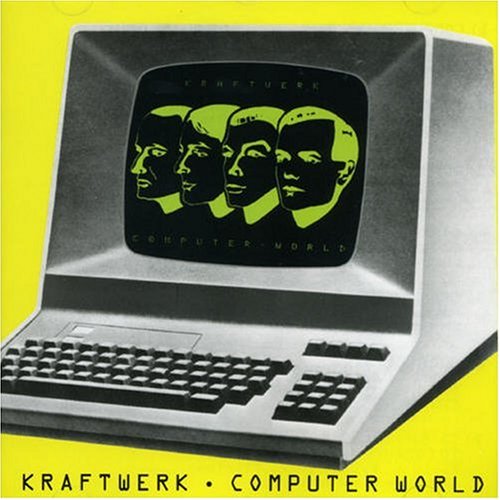
If you imagine a Venn diagram of musical genres, you may not immediately think of Kraftwerk being the common ground for artists creating and performing pop-rock, funk, soul, and hip-hop. Yet, there in the middle, connecting them all, is that small electronic band from Düsseldorf: four men who blurred the line between human capability and digital precision.

Ironically, the band that would go on to inspire musicians from all genres never aspired to make names for themselves individually. Seeking only to expand the scope of musical technology and to comment on a changing world, Kraftwerk’s music grew to be so profound that they came to be known as the “Beatles of electronic music.”

At the onset of accessible computer technology in the early ‘80s, Kraftwerk released Computer World. Listening to it today, in our society so inundated with all things digital, it is impossible not to marvel at what a harbinger it was of things to come. In this episode, we are joined by Kid Ginseng, DJ and head of New York electro-funk label Kraftjerkz, and lifelong Kraftwerk listener. Our discussion is a deep-dive into their background and influence, highlighting an artist who is continuing Kraftwerk’s legacy today.

Subscribe on iTunes

(ps — while you’re there, please rate and review us in the iTunes store so more people can discover us and we can all be friends who talk about music together!) 

Episode notes and postscript corrections

  • We love old music, but we love new music, too, and with our special guest episodes, we’ll be bridging the gap between the two. As we’ve said before: you have to know where you came from to know where you’re going.
  • “Numbers” is a template for current electro beats. Listen to the track here for an idea of what that sounds like.
  • If you don’t have Planet Rock,” then you probably aren’t a good DJ. Just saying.
    • Peep our further reading section for more info about how revolutionary “Planet Rock” was in the hip-hop scene.
  • No, really, Kraftwerk used Texas Instruments tools to create music. Way better than hacking your TI-83 to play some off-brand version of Super Mario Brothers in calc class. Not that we did that in high school. Of course we didn’t do that.
  • Talk about the double-edged sword of technology with us for a second. Yes, technology makes the creative process of making music accessible and open to innovation for almost anyone — good. But, it makes creating music accessible for almost anyone i.e. people don’t necessarily need skills anymore because they can rely on a machine to do it all for them — bad.
  • Read more here about how they began incorporating sequencing on their Man-Machine album.
  • No, really, Kraftwerk stans cycling pretty hard.
  • We hate lists so much sometimes, but here’s what Pitchfork had to say about “Computer Love” in their 200 Best Songs of the ‘80s list (scroll to number 53). It’s a pretty good blurb.
  • Late ‘90s/early 2000s electroclash takes a huge page out of Kraftwerk’s book — peep our Spotify playlist for some examples.
  • Sorry for talking about LCD Soundsystem again (but not really because it’s relevant).
  • Here are two brief lists of notable times Kraftwerk was sampled: in hip-hop and from Computer World in general.

Album credits:
Ralf Hütter – album concept, artwork reconstruction, cover, electronics, keyboards, mixing, Orchestron, production, recording, Synthanorma Sequenzer, synthesiser, vocoder, voice
Florian Schneider – album concept, cover, electronics, mixing, production, recording, speech synthesis, synthesiser, vocoder
Karl Bartos – electronic percussion
Emil Schult – cover

Further watching: 
Kraftwerk: Pop Art documentary | 2013
Kraftwerk & the The Electronic Revolution | 2013
“Computer World” live at the Tate Modern | 2013

Further reading: 
The 50 Greatest Hip-Hop Songs of All Time | Rolling Stone (December 2012) 
Sound Machine: How did a pop band end up in a museum? | The New Yorker (April 2012)
Kraftwerk Day Five: 1981 ‘Computer World’ Invents Electronic Funk | Rolling Stone (April 2012)
Who Knew That Robots Were Funky? | The New York Times (December 2009)
Kraftwerk: I Was a Robot | 2017
Kraftwerk: Man, Machine and Music | 2001

Episode 13: NIGHTCLUBBING

grace-jones240214

NIGHTCLUBBING – Grace Jones – Island Records – 1981

Music. Fashion. Art. Icon. Attempting to mix these to create an internationally acclaimed persona would be a daunting task for anyone with less magnetism than Grace Jones, who succeeded so overwhelmingly at becoming a cross-genre “It Girl” that she forged a path for future generations of singular artists to follow.

Already a well-known model and disco queen, Grace Jones began recording music in the late 1970s. The records did modestly well, but in 1979, Island Records founder and producer Chris Blackwell began working with her on a new musical aesthetic, combining funk, disco, reggae, and new wave styles to create something new — and uniquely Grace Jones. With the talents of Sly Dunbar, Robbie Shakespeare, Wally Badarou, Mikey Chung, Uziah Thompson, and other musicians who comprised the Compass Point All-Stars, the sessions that became Nightclubbing would go on to influence music through each subsequent decade.

As we seek to bridge the gap between the generations, there are few better examples of lasting musical, sartorial, and artistic inspiration than Grace Jones. In today’s episode on her 1981 album Nightclubbing, we explore the effervescent enigma of a woman who left her Jamaican home to travel the world, only to return to the Caribbean to create the music that would become the focal point of her legacy. We dive deep into the relationships between music and art, between the artist and the image, and between icon and legacy. 

Subscribe on iTunes

(ps — while you’re there, please rate and review us in the iTunes store so more people can discover us and we can all be friends who talk about music together!) 

Episode notes and postscript corrections

  • Revisit our episode on Betty Davis’s They Say I’m Different and let us know if you see any similarities between Betty and Grace.
  • Let’s talk about this album cover!
    • First and foremost: Grace Jones is the OG baddie, textbook unfuckwithable.
    • Especially, let’s talk about John Paul Goude. Here’s one article about their working relationship, but check out our further reading for more.
  • Here’s that “I came to slay” Grace Jones-Pee Wee’s Christmas Special appearance we were talking about.
  • Check out the further reading links below for a piece about Grace Jones’s androgynous impact on fashion and music that’s worth reading, if you’re interested.
  • Two words: Fonce Mizell.  
  • Here are the translated lyrics to “I’ve Seen That Face Before (Libertango),” if you’d like a more thorough explanation than Carrie’s subpar French can offer. (She tried. Also, if anyone wants to tutor her, she’s willing to re-learn.)
  • Visuals are a huge part of this album — see our further watching section below for some great links.
  • Here’s more info about “Demolition Man” so you can learn what exactly Sting was talking about when he wrote it.
  • “I’ve Done It Again” is probably about an LSD trip, so, there’s that.
  • Finally, worth repeating here, the final paragraph of Grace’s memoir: “If people complain that I am not doing enough of my old material, not performing all the hits, I will stand in front of them, a formlessness that engulfs all form. I will put on another hat, crack my whip, scatter fireflies, fix them with a five-thousand-year-old stare, fit to fight to the bitter end, becoming a ghost with the passing of time. I will be ready for the afterlife, for my bones to be buried in the mountains of Jamaica, or the canals of Venice, or the dark side of the moon, or under the ground in the cities I’ve lived in and loved. And I will say: Do you want to move forward with me, or not? Do you want to know where I am going next? It’s time for something else to happen.

Favorite track(s): Feel Up and Pull Up To The Bumper (Carly) | Pull Up To The Bumper and Feel Up (Carrie)
Least favorite track: Art Groupie (Carly) | I’ve Seen That Face Before (Libertango) (Carrie)

Album credits:
Wally Badarou – keyboards
Monte Browne – rhythm guitar
Mikey Chung – guitar
Masai Delon – vocals
Tyrone Downie – keyboards, vocals
Sly Dunbar – drums, syndrums
Jack Emblow – accordion
Grace Jones – vocals, backing vocals
Barry Reynolds – guitar
Jess Roden – vocals
Robbie Shakespeare – bass
Mel Speller – percussion, vocals
Uziah Thompson – percussion
Chris Blackwell, Alex Sadkin – production

Further Watching: 
Grace Jones: One Man Show | 1982
Grace Jones: Bloodlight and Bami (trailer) | Forthcoming documentary

Further Reading:
I’ll Never Write My Memoirs | Jones’s irony, please memoir (2015)
Grace Jones: Warm Leatherette (re-issue review) | Pitchfork (June 2016)
Welcome to Planet Grace Jones | Paper Magazine (October 2015) 
Grace Jones Explores Androgyny in a New Memoir | Vogue (September 2015)
As Much As I Can, As Black As I Am: The Queer History of Grace Jones | Pitchfork (August 2015)
I’ve Seen That Face Before: Looking back on Grace Jones’s iconic Nightclubbing with the people who made it happen | Fact Magazine (May 2014) 
Grace Jones: Nightclubbing (deluxe re-issue review) | Pitchfork (May 2014)
Grace Jones pulls up to the bumper | The Guardian (June 2011)
Chris Blackwell | Interview Magazine (March 2009)
Grace Jones by Jean Paul Goude | V Magazine (February 2009) 

Episode 12: RUNNING ON EMPTY

runningonempty11

RUNNING ON EMPTY – Jackson Browne – Asylum Records – 1977

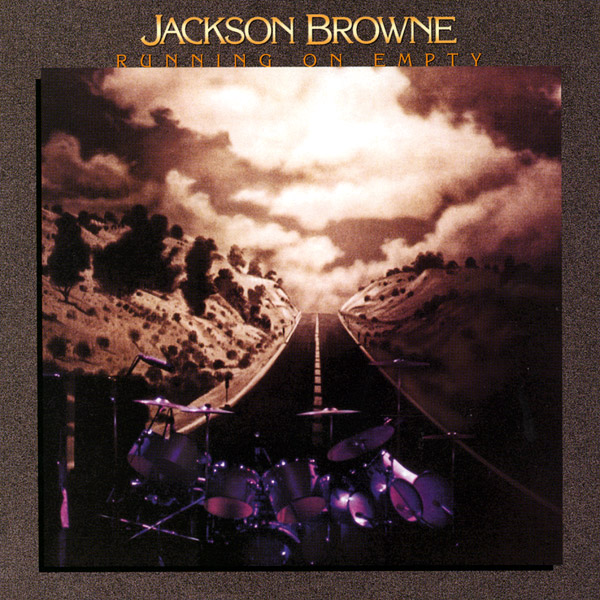
Running on Empty was an album that wasn’t supposed to work. Ten new cuts, all recorded live, in various parts of the country, over the course of two months? To his label, this sounded like pure folly, but Jackson Browne knew this was not just a way to fill time between studio albums; it was to be his labor of love.

Since becoming a recording artist at the age of 18, Browne had experienced life both as Greenwich Village bohemian in the ‘60s with the likes of the Velvet Underground, and as an essential contributor to the emerging Southern California rock sound in the early ‘70s. By 1977, he was looking for something new to try, something he hadn’t yet done — so in August of that year, he took his favorite sessions players on the road and hit “record.”

The collection of recordings that became Running On Empty would be Jackson Browne’s greatest commercial success, going platinum within months of its release. Today, it remains a strikingly fresh portrait of the realities of touring life, and whether referencing the road to the next gig or the road to the next phase of life, it’s the album’s universal displays of humanity that keeps the songs in your head long after the needle hits the runout grooves.

Subscribe on iTunes

(ps — while you’re there, please rate and review us in the iTunes store so more people can discover us and we can all be friends who talk about music together!) 

Episode notes and postscript corrections

    • Hiiiiii, here we are with another album from 1977 — you might notice its stark difference from our previous ‘77 episode on Marquee Moon.
      • The amount of iconic outputs from multiple musical genres in the ‘70s, but particularly 1977, never ceases to amaze us. Best year in pop culture. Fight us on this.
      • You can break down the differences and the reasons why they resonated with particular audiences in a million different ways, but at its most broad, let’s just say that Marquee Moon very much exemplified the East Coast/New York punk aesthetic, while Running On Empty can be held up as an example of the West Coast/Laurel Canyon/Cal Rock soft scene.
    • See our further reading section to read that really well-written original review of Running on Empty from Rolling Stone in 1978 we talked about.
    • Running on Empty was initially just a way to buy time to conceive new material for another traditional LP, but it became a way to break the repetitive record-making pattern success brings. JB has said: “You go, ‘OK, great, let’s try to do something more like that.’ But that’s not what you were doing when you did it in the first place. You were just doing what you wanted to do next.”
    • Here’s that gorgeous Cameron Crowe essay from the 2005 re-issue that Carrie read an excerpt from. He’s the best.
    • Quick background info about the session players on this album:
      • The Section (Danny “Kootch” Kortchmar, Craig Doerge, Leland Sklar, and Russ Kunkel) were Asylum’s de facto house band and have played on a slew of ‘70s soft rock albums for everyone from Carole King to Linda Ronstadt to Warren Zevon. There’s a great article about them in our further reading section.
      • David Lindley and Jackson Browne have been long, long, longtime collaborators. You can read more about him in the links below, too.
    • Our bad. The author of that rad review comparing circa-1977 culture to “feeling like a trashed Holiday Inn room” was actually RJ Smith for Blender Magazine in a review of the 2005 reissue, not, as we cited in the pod, Robert Christgau.
      • Unfortunately, we can’t seem to find a working link for the full review — not even using Internet Archive’s Wayback machine — because Blender folded in 2009 and, apparently, took its archive with it.
    • David Lindley is the real MVP on “You Love the Thunder,” bringing that gee-tar rock and roll edge to Jackson Browne’s soft piano rock.
    • Alright, buckle up. “Cocaine” has a LONG history.
    • If you have Running on Empty on vinyl, flip it over for some great Easter eggs in the track-by-track notes. Pro-tip: always read the liner notes.
    • If “The Load Out” doesn’t give you some feels, there’s a high possibility that you have an empty cavity in your chest where your heart is supposed to be.
      • Shoutout to roadies: we know you, we see you, we love you, we appreciate everything you do. We are once again saying: bands are a sum of their parts, and that continues after the music is recorded and the performance begins.
    • Jackson Browne’s — and this album’s — legacy is long and ongoing.
      • Running On Empty, initially thought to be a crazy idea, ended up being his best-selling album and is on too many lists to count of the best live albums, best albums of the ‘70s, etc.
      • Some current artists who have Jackson Browne’s fingerprints all over them: Dawes, Wilco, Jim James, Jenny Lewis, Tristen… the list goes on and on.
    • Anyway, we love you JB

Favorite track(s): The Load Out (Carly) | Running on Empty and Stay (Carrie)
Least favorite track: Rosie (Carly) | Love Needs a Heart (Carrie)

Album credits:
Jackson Browne – guitar, piano, vocals
Rosemary Butler – background vocals, co-lead vocal on “Stay”
Craig Doerge – piano, keyboards
Doug Haywood – background vocals
Danny Kortchmar – lead guitar, harmony vocals (on “Shaky Town”)
Russ Kunkel – drums, snare drum, cardboard box, hi hat
David Lindley – lap steel guitar, fiddle, co-lead vocal on “Stay”
Leland Sklar – bass
Joel Bernstein – background vocals (on “Rosie”) & tour photographer

Further watching:
“One time I sued John McCain” interview segment | 2014
Jackson Browne’s Rock and Roll Hall of Fame induction | 2004
“Running on Empty” (2004 induction ceremony) | 2004

Further reading: 
Session legend/producer Russ Kunkel on 13 career-defining records | Music Radar (April 2014)
The Section: Knights of Soft Rock | Rolling Stone (April 2013)
Behind the Song: Jackson Browne, “Running on Empty” |American Songwriter (December 2012)
Jackson Browne on Meeting David Lindley for the First Time | Fretboard Journal (March 2009)
Jackson Browne: The Rolling Stone Interview | Rolling Stone (August 1980)
Running on Empty (album review) | Rolling Stone (March 1978)

Episode 11: I’M STILL IN LOVE WITH YOU

al-green-love

I’M STILL IN LOVE WITH YOU – Al Green – Hi Records – 1972

Al Green’s 1972 album I’m Still In Love With You is a personal one: an album for smooth Saturday nights and sweet Sunday mornings, for both weddings and double digit anniversaries. It recalls time spent with family, friends, and lovers, and inspires memories to be made in the future. It’s an album made for lasting connections, and is undoubtedly one that is best enjoyed when shared.

In this episode, we examine the foundation of this iconic record and explore the greater musical landscape from which it was born. We discuss the one-of-a-kind house band that gave the album its distinct sound, the Southern stronghold that informed the album’s character, and the producer who oversaw it all, mixing all the elements together to create what is arguably one the greatest American soul records of the 20th century. An album is only as good as the sum of its parts, and here, we examine how I’m Still In Love With You remains an upstanding example.

Subscribe on iTunes

(ps — while you’re there, please rate and review us in the iTunes store so more people can discover us and we can all be friends who talk about music together!) 

Episode notes and postscript corrections

  • Here’s a brief history of Memphis soul and Hi Records’ and Stax’s places within it.
    • The Hi Rhythm Band released their own album in 1976 — listen to it here.
    • Debate: Did they make a banjo funky or is it like the flute, whose presence in funk is bad, like, 99 percent of the time? 
  • Here’s a simple, science-y explanation for why sound quality on vinyl can degrade the closer you get to the center of the album — hence, why Carrie assumes making a full, deep song like “I’m Still In Love With You” the very first track was more of a quality control choice than a creative one.
  • The Al Green drum sounds are SO. GOOD. You can thank Al Jackson, Jr. and Howard Grimes for that.
  • We both kind of, sort of think the second side of this album is weak. Good and enjoyable, but it all starts to run together. Tell us if you disagree.
  • Al Green’s life has been interesting since the release of I’m Still In Love With You.
    • Here’s a brief explainer on that girlfriend-burn altercation thing, which was insane.
    • Green went back to gospel music not long after this and is now an ordained reverend who primarily releases gospel music.
  • Just a few artists Green has influenced (and whose music you can find in our playlist): Prince, Sade, James Blake, John Legend, Leon Bridges, John Mayer, Justin Timberlake… the list goes on and on and on.

Favorite track: Love and Happiness (Carly) | Love and Happiness (Carrie)
Least favorite track(s): For The Good Times (Carly) | For The Good Times and One of These Good Old Days (Carrie) 

Album credits:

  • Al Green — lead vocals
  • Howard Grimes — drums, rhythm section
  • Al Jackson, Jr — drums
  • Ali Muhammed Jackson — drums
  • Charles Hodges — drums, organ, piano
  • Leroy Hodges — bass
  • Mabon “Teenie” Hodges — guitar
  • Wayne Jackson — horn section, trumpet
  • Andrew Love — tenor horn, tenor saxophone
  • Ed Hogan — tenor horn, tenor saxophone
  • Jack Hale, Sr. — horn section, trombone
  • James Mitchell — string and horn arrangements, tenor horn, baritone saxophone
  • Donna Rhodes — background vocals
  • Sandra Rhodes — background vocals
  • Sandra Chalmers — background vocals
  • Charles Chalmers — arranger, horn arrangements, string arrangements, background vocals
  • Larry Walsh — mastering
  • Pam Brady — assistant
  • Pete Welding — assistant
  • Robert Gordon — liner notes
  • Tom Cartwright — project director
  • Willie Mitchell — engineer, producer

Further watching:
Al Green’s Kennedy Center Honors induction | 2014  
Al Green live concert (source unknown) | 1974
Willie Mitchell on Al Green and Hi Studio | Date unknown
Down To Earth (short doc on Memphis soul) | 2009 

Further reading: 
R&B Gold: Leroy Hodges Goes Hi | Bassplayer (June 2017)
Al Green, the soul legend and Kennedy Center honoree, is still tired of being alone | The Washington Post (December 2014)
100 Greatest Singers of All Time: Al Green | Rolling Stone (December 2010)
Let’s Stay Together/I’m Still In Love With You/Greatest Hits reissue review | Pitchfork (April 2009)
Memphis Magic: The Al Green Sound | Rolling Stone (October 1973)
I’m Still In Love With You review | Rolling Stone (November 1972)

Episode 10: TOM PETTY AND THE HEARTBREAKERS

tom-petty-and-the-heartbreakers.jpg

TOM PETTY AND THE HEARTBREAKERS – Tom Petty and the Heartbreakers – Shelter Records – 1976

Before Tom Petty and the Heartbreakers were Tom Petty and the Heartbreakers, classic American rock icons, they were just five kids from Gainesville, Florida who had driven cross country to Los Angeles with $200 and hopes of landing a record deal for their southern rock group Mudcrutch.

Their ascent would be a slow one; the group signed with Shelter Records in 1974 and released a single, only to be dropped from the label. The band broke up. The band got back together and found themselves with a new opportunity to release an album — this time with a better name: Tom Petty and the Heartbreakers.

Released in 1976, Tom Petty and the Heartbreakers’ self-titled debut is an amalgamation of styles and influences. It travels from classic blues to swampy country to classic ‘50s rock in songs that are abruptly short and full of anxious, pulsing rhythms that weren’t too deviant from the emerging punk scene. It’s no wonder people didn’t know what to do with them or how to classify them when the album was released.

Though the album contains songs that are now staples of American pop culture, engrained in our collective consciousness — songs like “American Girl” and “Breakdown” — it would be a few years before Tom Petty and the Heartbreakers cemented their status as household name rock stars — but it’s a status they’ve held onto.

In this episode, we discuss the variety of musical influences on early Heartbreakers work, dive into Tom Petty’s sparse songwriting style, and talk about why Tom Petty and the Heartbreakers’ enduring, four decade long careers truly inspire us.

Subscribe on iTunes

(ps — while you’re there, please rate and review us in the iTunes store so more people can discover us and we can all be friends who talk about music together!) 

Episode notes and postscript corrections

  • We love almost anything and everything Tom Petty (with and without the Heartbreakers) has released, but we’re covering the Heartbreakers’ debut, rather an album as iconic as Damn the Torpedoes, because we want to have conversations about albums without just rehashing what everyone else has already said. 
  • See our further watching and further reading links below for two tomes on Tom Petty and the Heartbreakers that we cannot endorse more emphatically.
    • Petty is Warren Zanes’ incredibly in-depth, intimate, and breathtaking biography of Tom Petty that will probably make you love Tom Petty more than you thought you could.
    • Runnin’ Down a Dream is Peter Bogdanovich’s epic, 4-hour long documentary of your dreams. It’s enthralling, candid, and thorough — so worth a binge session.
  • It all starts with Mudcrutch.
    • Listen to some of their original demos here or here.
    • Mudcrutch got back together in 2007 and have released two albums since. Listen to them here.
  • TBH, we don’t blame the good people of 1976 for thinking Tom Petty and the Heartbreakers were punk. It really doesn’t help that there was already a punk band — a staple at CBGB — who were also called the Heartbreakers…
  • We’re not going to get too too deep on lyrical analysis — Tom Petty’s songwriting is often sparse and without a lot of intentional metaphors to unpack; he’d probably roll his eyes and think we were really digging for bullshit if we went that route.
  • “Breakdown” is a fantastic combination of old and new. Seriously.
    • Listen to “Breakdown.” Then listen to Booker T. and the M.G’s “Green Onions.” Note the similarities.
    • Listen to “Breakdown.” Then listen to Ray Charles’ “Hit the Road Jack.” Boom.
    • Listen to a live version of “Breakdown” where they weave the aforementioned classic into their own song.
  • We love all the Heartbreakers, but honestly, people don’t talk enough about how MVP Mike Campbell and Benmont Tench are.
  • All roads go back to Gainesville. (Watch this. Trust us on this one.)
  • 500% here for this video of Tom Petty and the Heartbreakers performing “Anything That’s Rock ‘N’ Roll” on Top of the Pops.
  • “Strangered in the Night” could totally be a sister song to “Two Gunslingers.” If you’re a regular listener, you’ll know how much we love sister songs.
  • We went down a musical rabbit hole again, which is fun.
    • Listen to Linda Ronstadt’s “You’re No Good.” Then listen to “Fooled Again.”
    • Listen to “Fooled Again.” Then listen to Sheryl Crowe’s “My Favorite Mistake.”
    • Did your brain melt a little bit?
  • Listen, “American Girl” is a bop and we don’t have time for any haters.
    • Slow this song down and you’ve got a haunting (but good) ballad.
    • Seriously. Don’t be that person who hates “American Girl” just because it’s popular. Just don’t.
    • Also, don’t be that person who wears the band tee-shirt without knowing anything about the band. Follow this trusty rule: Can you name two non-singles and the bassist? Then you can wear the band tee.
  • We love Tom Petty and the Heartbreakers so very much, apologies if we gushed a little.
  • If you missed the last (and only, so far!) Mudcrutch tour, we are truly sorry. (Carly feels your FOMO). If you did, and you’d like to talk about how magical it was with Carrie, hit us up.
  • Tom Petty and the Heartbreakers are currently on a North American tour to commemorate their 40th anniversary.
    • No, it’s not a greatest hits tour; it’s full of deep cuts to be stoked about.
    • If you can go: GO. (And say hi to Carrie if you see her at Newark and/or Forest Hills — yes, both, yes, she knows she has a problem.)
    • If you can’t go: Hit up this awesome live recording of their 30th anniversary tour.

Favorite track(s): Breakdown (Carly) | American Girl, Luna (Carrie)
Least favorite track: Luna (Carly) | Mystery Man (Carrie)

Album credits:
Tom Petty – vocals, electric guitar, acoustic guitar, keyboards
Mike Campbell – electric guitar, acoustic guitar
Benmont Tench – piano, hammond organ, keyboards
Ron Blair – bass guitar on tracks 1–2, 4–5, 7–10, cello
Stan Lynch – drums on tracks 1–2, 4–10, keyboards

Jeff Jourard – electric guitar on tracks 2, 7
Donald “Duck” Dunn – bass guitar on track 3
Emory Gordy – bass guitar on track 6
Randall Marsh – drums on track 3
Jim Gordon – drums on track 6
Noah Shark – maracas, tambourine, sleigh bells
Charlie Souza – saxophone on track 3
Phil Seymour – backing vocals
Dwight Twilley – backing vocals

Further watching:
Runnin’ Down a Dream | 2007

Tom Petty MusiCares Speech: Rock & Roll Empowers America’s Youth | 2017
Tom Petty Q on CBC interview | 2014
Rock and Roll Hall of Fame induction speech | 2002

Further reading:
Petty (biography) | 2015
Conversations With Tom Petty (interview compilation) | 2005

Benmont Tench: The 40th Anniversary Interview | Keyboard Mag (March 2017)
40 Years Ago: Tom Petty and the Heartbreakers Release Their Debut Album | Ultimate Classic Rock (November 2016)
Tom Petty On Cheap Speakers And George Harrison | NPR (August 2014)
Tom Petty: Rolling Stones Were ‘My Punk Music’ | Rolling Stone (July 2014)
Tom Petty Knows ‘How It Feels’ | NPR (July 2006)
Mike Campbell Is More Than Just the Guitarist For Tom Petty and the Heartbreakers | The Georgia Straight (August 1999)